- English
- Español
- Português
- русский
- Français
- 日本語
- Deutsch
- tiếng Việt
- Italiano
- Nederlands
- ภาษาไทย
- Polski
- 한국어
- Svenska
- magyar
- Malay
- বাংলা ভাষার
- Dansk
- Suomi
- हिन्दी
- Pilipino
- Türkçe
- Gaeilge
- العربية
- Indonesia
- Norsk
- تمل
- český
- ελληνικά
- український
- Javanese
- فارسی
- தமிழ்
- తెలుగు
- नेपाली
- Burmese
- български
- ລາວ
- Latine
- Қазақша
- Euskal
- Azərbaycan
- Slovenský jazyk
- Македонски
- Lietuvos
- Eesti Keel
- Română
- Slovenski
- मराठी
- Srpski језик
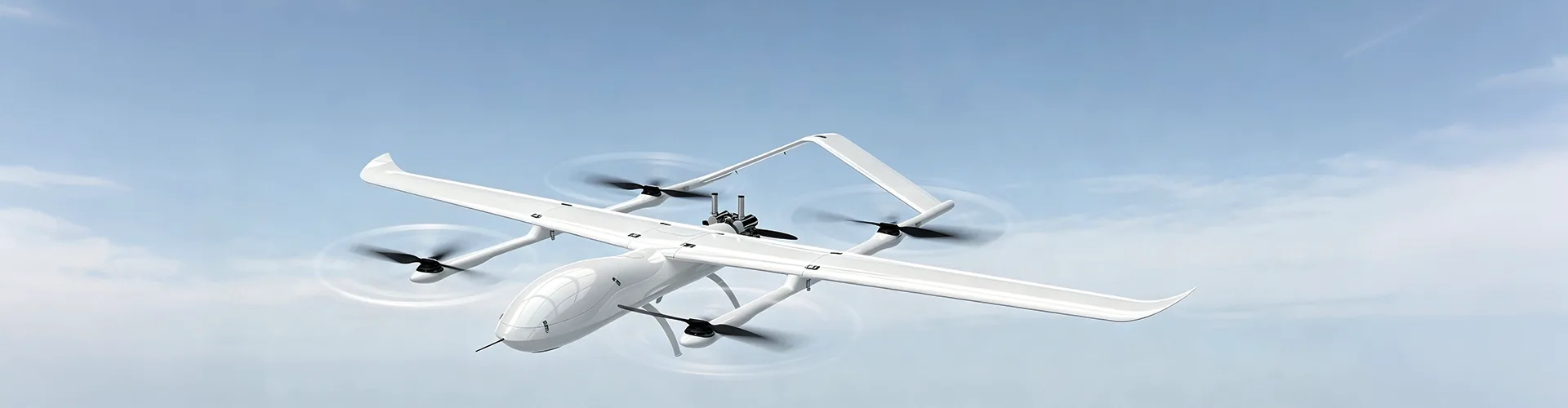
What Makes a Long Endurance Inspection Drone Effective for Complex Infrastructure Missions?
A long endurance inspection drone is designed to solve one of the biggest challenges in modern aerial inspection: limited productive flight time. For power lines, pipelines, bridges, industrial facilities, solar farms, wind turbines, and other large assets, endurance is not simply a matter of keeping an aircraft in the air longer. A practical inspection platform must balance flight duration, payload capacity, flight stability, sensing performance, communication reliability, safety, and mission flexibility. This guide explains what makes a long endurance inspection drone useful in real-world operations and how buyers can evaluate a platform according to actual inspection requirements rather than headline specifications.
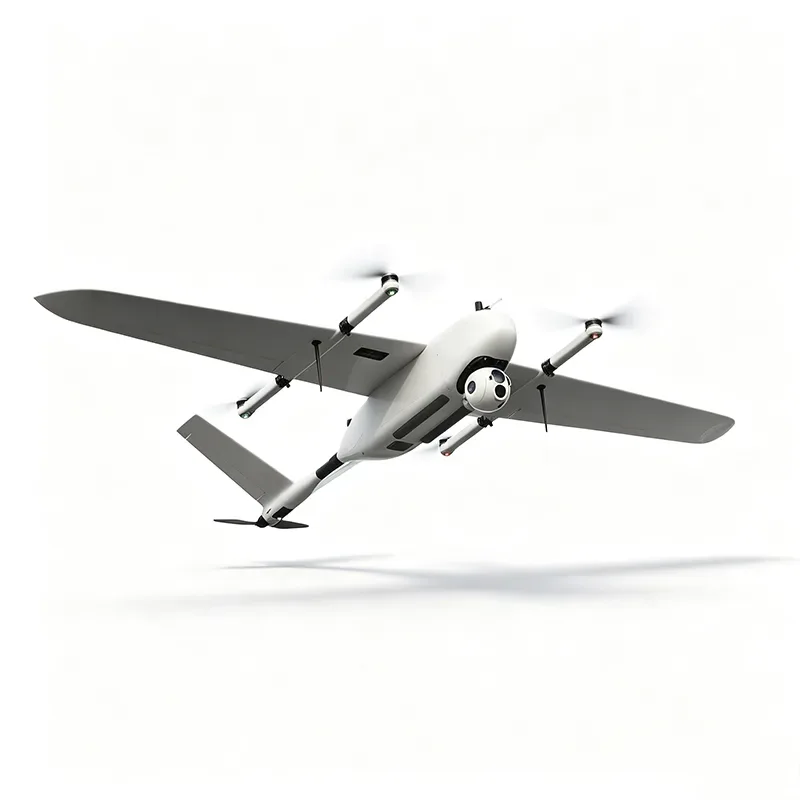
Table of Contents
- What Is a Long Endurance Inspection Drone?
- Why Does Long Endurance Matter for Inspection Work?
- What Determines Actual Flight Endurance?
- How Does Payload Affect Inspection Performance?
- Which Inspection Applications Benefit Most?
- What Features Should Buyers Examine?
- Long Endurance Inspection Drone Evaluation Table
- How Should an Inspection Mission Be Planned?
- How Can Common Inspection Challenges Be Reduced?
- What Should Buyers Ask Before Purchasing?
- What Is the Future of Long Endurance Inspection Drones?
- Frequently Asked Questions
- Conclusion
What Is a Long Endurance Inspection Drone?
A long endurance inspection drone is an unmanned aerial platform engineered to remain airborne for extended periods while collecting useful inspection data. Unlike a drone intended mainly for short photography tasks, an inspection-focused platform must operate as part of a complete data-collection workflow.
The aircraft may carry visible-light cameras, thermal imaging systems, LiDAR, zoom cameras, multispectral sensors, gas detection equipment, or other specialized payloads. The exact configuration depends on the asset being inspected and the type of information required.
The key point is that endurance should not be understood as flight time alone. A drone can have a long theoretical flight duration but deliver limited productive inspection time if its payload is heavy, wind conditions are demanding, or substantial energy is required for takeoff, hovering, climbing, returning, and landing.
For professional users, the more useful question is therefore: How much reliable inspection work can the drone complete during one mission?
Why Does Long Endurance Matter for Inspection Work?
Many infrastructure inspection projects cover large or difficult-to-access areas. Repeated takeoffs, landings, battery changes, and repositioning can interrupt the inspection process and increase operating time.
A longer-endurance platform can help operators maintain a more continuous workflow. This is particularly valuable when inspecting linear infrastructure, remote facilities, large industrial sites, or assets distributed across challenging terrain.
- More productive inspection time: More of each mission can be dedicated to collecting useful data.
- Fewer battery interruptions: Longer missions can reduce the frequency of landing and battery replacement.
- Better route continuity: Continuous inspection can simplify data organization and asset tracking.
- Lower deployment frequency: Operators may cover more inspection points during a single sortie.
- Improved access to remote assets: Longer endurance provides greater flexibility when the launch location is far from the inspection target.
However, endurance should always be evaluated together with payload, weather, terrain, route structure, communications, and required safety reserves. These factors determine whether the advertised flight time translates into useful field performance.
What Determines Actual Flight Endurance?
Drone endurance is influenced by the interaction of several engineering and operational factors. Increasing battery capacity alone does not automatically produce proportional gains because additional battery weight also increases the energy required to fly.
| Factor | Influence on Endurance | What Buyers Should Consider |
|---|---|---|
| Battery system | Provides the energy required for the mission | Capacity, weight, thermal management, charging and battery health |
| Aircraft weight | Higher weight generally increases energy consumption | Empty weight versus fully equipped takeoff weight |
| Payload | Additional sensors increase both weight and power demand | Sensor weight, power consumption and mounting requirements |
| Propulsion | Affects energy efficiency and flight stability | Motor efficiency, propeller design and operating conditions |
| Weather | Wind, temperature and precipitation can change energy consumption | Operating limits under real field conditions |
| Flight profile | Hovering, climbing and rapid maneuvering may consume more energy | Actual inspection route and aircraft behavior |
A useful endurance specification should therefore be associated with a defined configuration. Buyers should ask whether the stated flight duration is measured with or without the intended inspection payload and whether a practical reserve has been included.
How Does Payload Affect Inspection Performance?
Inspection drones are rarely operated as bare aircraft. Their value comes from the sensors they carry and the quality of information they collect.
A high-resolution optical camera may be sufficient for visual inspections, while thermal cameras can help identify abnormal temperature patterns. LiDAR can provide three-dimensional information, and specialized sensors may be required for environmental or industrial applications.
The payload affects more than maximum takeoff weight. It can influence balance, power consumption, flight stability, vibration, cooling requirements, and data transmission.
When evaluating payload compatibility, buyers should examine:
- Maximum supported payload weight
- Payload mounting method
- Center-of-gravity requirements
- Electrical power available to the payload
- Communication interface
- Camera or sensor stabilization
- Data storage capacity
- Real-time transmission requirements
- Impact of payload weight on practical endurance
The ideal platform is not necessarily the drone with the largest payload rating. Instead, it should provide a suitable balance between payload capability and useful flight duration for the intended inspection mission.
Which Inspection Applications Benefit Most?
Long endurance inspection drones are particularly useful when inspection routes are extensive, assets are difficult to reach, or repeated manual inspection would consume significant time and resources.
Power Infrastructure
Power line and transmission infrastructure: Long-distance routes can require inspection of towers, conductors, insulators, vegetation conditions, and surrounding areas. A long endurance platform can support more continuous corridor inspection.
Pipeline inspection: Pipelines can extend across remote terrain. A drone capable of maintaining a longer mission can help operators inspect larger sections while reducing unnecessary repositioning.
Industrial facilities: Refineries, factories, storage facilities, and other industrial environments may contain structures that are difficult or hazardous for personnel to inspect directly.
Bridges and large structures: Drones can capture detailed visual information from difficult angles while reducing the need for some manual access operations.
Solar farms: Large photovoltaic installations require systematic inspection. A suitable drone can combine high-resolution imaging with thermal sensing to help identify abnormal areas.
Wind turbines: Aerial inspection can provide close visual information about blades and other components while reducing the need for certain conventional access methods.
What Features Should Buyers Examine?
Selecting a long endurance inspection drone requires looking beyond one specification. A reliable platform should support the complete inspection workflow from takeoff to data analysis.
-
Practical endurance
Evaluate flight duration with the intended payload and operational reserve rather than relying solely on an unloaded maximum. -
Stable flight performance
Inspection imagery is only useful when the aircraft can maintain controlled movement and stable sensor positioning. -
Payload flexibility
Modular payload support allows the same aircraft to serve multiple inspection scenarios. -
Reliable communication
Long-distance missions require dependable communication between the aircraft, control system, and operator. -
Navigation capability
Accurate positioning and route planning are important when inspection data must be associated with specific assets. -
Environmental adaptability
Wind, temperature, humidity, dust, and terrain should be considered before deployment. -
Data quality
A longer flight is not valuable if the resulting imagery or sensor data cannot support the inspection objective. -
Maintenance and support
Battery replacement, spare parts, software updates, training, and technical assistance can strongly influence long-term usability.
Long Endurance Inspection Drone Evaluation Table
| Evaluation Area | Basic Requirement | Professional Mission Consideration |
|---|---|---|
| Endurance | Longer flight duration | Productive inspection time with payload and reserve |
| Payload | Compatible with inspection camera | Multi-sensor and mission-specific configurations |
| Navigation | Stable positioning | Repeatable route and asset-based inspection |
| Communication | Reliable control link | Stable data and command transmission over the intended operating area |
| Flight stability | Controlled flight | Stable sensor performance in variable conditions |
| Maintenance | Routine battery and component checks | Long-term fleet management and technical support |
| Customization | Standard configuration | Adaptable aircraft, payload and software integration |
How Should an Inspection Mission Be Planned?
Long endurance does not eliminate the need for careful mission planning. In fact, longer missions make planning even more important because the aircraft may operate farther from its launch point for a longer period.
A practical mission planning process can include the following steps:
- Define the inspection objective. Determine exactly what defects, conditions, or measurements need to be identified.
- Map the inspection area. Identify the asset location, terrain, obstacles, access points, and recovery areas.
- Select the payload. Match the camera or sensor to the inspection target.
- Estimate the complete aircraft load. Include batteries, payload, accessories, and other equipment.
- Build an energy budget. Consider takeoff, transit, inspection, return, weather and safety reserve.
- Set appropriate operating limits. Define conditions under which the mission should be delayed or stopped.
- Plan data handling. Determine how imagery and sensor data will be stored, transferred, processed and reviewed.
This approach helps prevent a common purchasing mistake: selecting a drone according to its maximum advertised endurance without considering the actual mission configuration.
How Can Common Inspection Challenges Be Reduced?
Inspection teams often face a combination of operational, technical, and environmental challenges. A well-designed aircraft can reduce some of these difficulties through appropriate system integration.
Challenge 1: Limited productive flight time. The solution is not simply a larger battery. Aircraft efficiency, total weight, payload power consumption and mission planning must be considered together.
Challenge 2: Inconsistent data. Stable flight, accurate positioning and appropriate sensor configuration can improve the consistency of inspection datasets.
Challenge 3: Multiple inspection requirements. A modular payload architecture can allow one aircraft platform to support different cameras or sensors for different projects.
Challenge 4: Difficult environments. Buyers should evaluate the aircraft according to the temperature, wind, humidity, altitude, terrain and other conditions expected during actual operations.
Challenge 5: Complex fleet management. Standardized batteries, maintenance procedures, flight records and component replacement schedules can make repeated operations easier to manage.
What Should Buyers Ask Before Purchasing?
Before purchasing a long endurance inspection drone, procurement teams should request mission-specific information rather than relying only on a standard product brochure.
- What is the expected endurance with the intended inspection payload?
- What payload configurations are supported?
- How does payload weight affect flight duration?
- What environmental conditions can the platform handle?
- What communication and navigation systems are included?
- Can the aircraft integrate third-party sensors?
- How are batteries monitored and maintained?
- What spare parts and technical support are available?
- Can the system be customized for a specific inspection application?
- What training and operational documentation are provided?
Buyers should also request demonstrations or representative mission data whenever possible. Real operational evidence can provide a more useful understanding of performance than laboratory specifications alone.
What Is the Future of Long Endurance Inspection Drones?
The development of inspection drones is moving toward more integrated systems rather than simply longer flight times. Future platforms are expected to place greater emphasis on autonomous mission planning, intelligent data processing, modular sensors, automated battery management, improved communications, and more efficient aircraft architectures.
Another important direction is the integration of multiple technologies into a single inspection workflow. Instead of collecting isolated photographs, operators can increasingly combine visual imagery, thermal information, three-dimensional mapping, positioning data, and automated analysis.
For commercial and industrial users, this means the value of a long endurance drone will increasingly depend on the quality and usability of the information produced during each mission.
Zhejiang Xuzhou Yihang Intelligent Technology Co., Ltd. can be positioned within this evolving field by focusing on inspection-oriented UAV solutions that combine aircraft capability, payload integration, operational requirements, and application-specific customization.
Frequently Asked Questions
How long can a long endurance inspection drone fly?
Flight duration varies significantly according to aircraft design, battery configuration, payload, weather, flight mode and mission profile. Buyers should compare endurance using the actual payload and operating conditions rather than relying only on an unloaded maximum specification.
What is the most important factor when choosing an inspection drone?
There is no single specification that determines suitability. Endurance, payload compatibility, stability, communication, navigation, environmental capability, data quality and maintenance support should be evaluated together according to the intended mission.
Can one inspection drone use different sensors?
Many professional platforms can support different payload configurations, but compatibility depends on payload weight, mounting structure, power supply, communication interfaces, software and center-of-gravity requirements.
Does a heavier battery always provide longer flight time?
Not necessarily. A larger battery stores more energy but also adds weight. The additional mass can increase power consumption and reduce the expected endurance benefit. Effective aircraft design must balance energy capacity and overall system weight.
Are long endurance drones suitable for power line inspection?
They can be highly suitable for large power infrastructure inspection because longer missions can support more continuous coverage. However, the aircraft must also provide appropriate imaging capability, navigation, communication, environmental performance and operational safety.
Can an inspection drone be customized?
Customization can involve the airframe, payload, battery system, communication equipment, software, mounting system and mission workflow. The appropriate level of customization depends on the application and technical requirements.
What is the difference between flight time and useful inspection time?
Flight time refers to how long the aircraft can remain airborne under defined conditions. Useful inspection time is the portion of that mission actually available for collecting the required data after accounting for takeoff, transit, maneuvering, return, landing and operational reserve.
What information should I provide to a drone manufacturer?
Provide the inspection target, route length, expected operating environment, desired flight duration, payload type and weight, required image or sensor quality, communication requirements, takeoff and landing conditions, and any customization requirements. These details help the manufacturer recommend a more suitable configuration.
Conclusion
A long endurance inspection drone is much more than an aircraft with a large battery. Its real value comes from the ability to convert available flight time into reliable, useful inspection data.
For professional buyers, the most important evaluation should therefore focus on the complete mission: aircraft efficiency, practical endurance, payload capability, sensor integration, flight stability, communication, navigation, environmental adaptability, maintenance, and data workflow.
Whether the application involves power infrastructure, pipelines, industrial facilities, bridges, solar farms, wind turbines, or other large assets, selecting the right platform starts with understanding the inspection task in detail.
Zhejiang Xuzhou Yihang Intelligent Technology Co., Ltd. can provide application-oriented UAV solutions for organizations looking to develop more efficient and adaptable inspection operations. If you are planning a long-duration inspection project or need a customized drone configuration, contact us to discuss your aircraft, payload, endurance, and application requirements.