- English
- Español
- Português
- русский
- Français
- 日本語
- Deutsch
- tiếng Việt
- Italiano
- Nederlands
- ภาษาไทย
- Polski
- 한국어
- Svenska
- magyar
- Malay
- বাংলা ভাষার
- Dansk
- Suomi
- हिन्दी
- Pilipino
- Türkçe
- Gaeilge
- العربية
- Indonesia
- Norsk
- تمل
- český
- ελληνικά
- український
- Javanese
- فارسی
- தமிழ்
- తెలుగు
- नेपाली
- Burmese
- български
- ລາວ
- Latine
- Қазақша
- Euskal
- Azərbaycan
- Slovenský jazyk
- Македонски
- Lietuvos
- Eesti Keel
- Română
- Slovenski
- मराठी
- Srpski језик

What Makes an Industrial Communications-Relay VTOL Drone Essential for Reliable Connectivity?
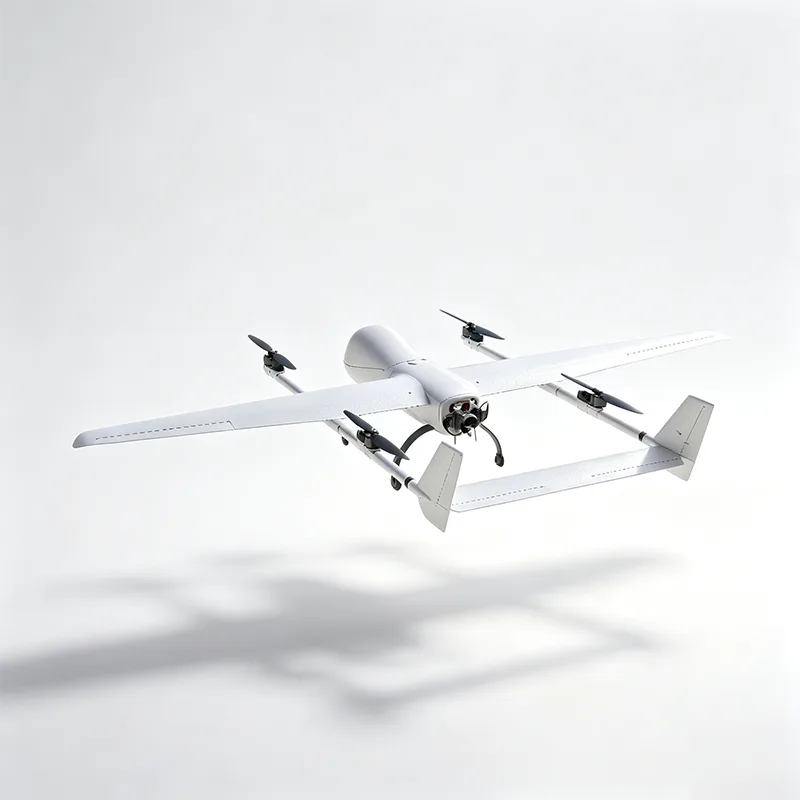
An Industrial Communications-Relay VTOL Drone combines vertical takeoff and landing capabilities with an airborne communications relay function to help maintain connectivity across challenging industrial environments. By positioning compatible communication equipment above terrain obstacles, remote facilities, or infrastructure gaps, this type of unmanned aerial vehicle can support data transmission, field coordination, inspection workflows, and emergency response. Understanding flight configuration, payload compatibility, endurance, network requirements, and operational safety helps organizations determine whether an airborne relay solution fits their communication needs.
1. Understanding Industrial Communications-Relay VTOL Drones
Reliable communication is fundamental to modern industrial operations. Remote monitoring stations, inspection teams, mobile equipment, sensors, and command centers often need to exchange information across large or geographically challenging areas. However, conventional ground-based networks may encounter coverage gaps caused by mountains, industrial structures, dense vegetation, long distances, or damaged infrastructure.
An Industrial Communications-Relay VTOL Drone is an unmanned aerial vehicle designed to support industrial missions by carrying compatible communication equipment to an elevated operating position. The airborne payload can serve as an intermediary between communication endpoints, helping establish a connection when a direct wireless path is unavailable or unreliable.
VTOL stands for vertical takeoff and landing. Depending on the aircraft configuration, a VTOL platform can combine vertical launch and recovery with efficient forward flight. This arrangement can reduce the need for a conventional runway while supporting missions that require travel between separated operating areas.
Airborne Communication Relay
Compatible radios, antennas, or network equipment can receive and forward signals between field devices, ground stations, and other connected systems.
Flexible Flight Operations
Vertical takeoff and landing can simplify deployment where space is limited, while forward flight may help cover larger operating areas.
Temporary Network Extension
An airborne relay can provide a temporary communications path without requiring permanent towers at every location.
Mission-Specific Configuration
The aircraft, communication payload, antennas, power supply, and ground-control equipment can be assessed as a complete system.
It is important to distinguish a relay drone from an aircraft that simply collects images or sensor readings. A relay-focused configuration prioritizes communication interfaces, link continuity, antenna placement, and network compatibility. Actual capabilities depend on the selected hardware and verified system configuration.
2. How the Airborne Relay System Works
The basic principle is to move a communication node to a position that improves the wireless path between two or more endpoints. Wireless signals can be obstructed by terrain, buildings, and other physical structures. Elevating a compatible relay can improve line-of-sight conditions, although it does not automatically eliminate interference or guarantee uninterrupted service.
Step 1: Identify the Coverage Gap
Operators first determine which locations cannot communicate reliably. The assessment should include terrain, distance, obstacles, radio frequency, antenna orientation, required data rate, and the type of information being transmitted.
Step 2: Position the Relay Aircraft
The VTOL drone is deployed to a suitable location based on the mission plan, flight limitations, and communication requirements. Its altitude and position should be selected to improve the relevant communication paths while maintaining safe operating margins.
Step 3: Establish the Communication Links
The onboard relay equipment receives information from one endpoint and forwards it through the configured network. Depending on the system architecture, the connection may carry voice, telemetry, sensor data, video, or IP-based traffic.
Step 4: Monitor Link Quality
Operators evaluate connection stability, latency, throughput, packet loss, and aircraft status during the mission. If the communication path deteriorates, the operating plan may require repositioning, a different antenna arrangement, or a change in mission scope.
Key consideration: An airborne relay creates an additional communication hop. Each segment must have sufficient link quality, compatible equipment, and appropriate configuration. The complete system performs only as well as its weakest critical link.
For industrial procurement teams, this means that advertised aircraft range alone is not enough to establish communications performance. The payload, ground equipment, network architecture, and operating environment must be evaluated together.
3. Why VTOL Design Matters for Industrial Missions
Traditional fixed-wing aircraft generally benefit from forward-flight efficiency but require suitable launch and recovery arrangements. Multirotor aircraft can take off and land vertically, but sustained hovering may consume significant energy. VTOL designs offer an alternative for missions where both flexible deployment and coverage across a larger area are important.
Deployment in Space-Constrained Locations
Industrial facilities, remote substations, construction sites, and temporary work zones may not have conventional runways. Vertical takeoff and landing can make it easier to deploy an aircraft from an appropriate prepared area, subject to the platform's actual requirements and local flight rules.
Efficient Travel Between Operating Areas
Some VTOL configurations transition from vertical flight to fixed-wing forward flight. This can be useful when a relay mission involves traveling to a distant coverage area before establishing the required communications position. Efficiency and endurance vary with aircraft design, payload, weather, and flight profile.
Adaptability to Changing Site Conditions
Industrial communication needs can change as projects progress, equipment moves, or temporary infrastructure becomes unavailable. An airborne node can be repositioned more flexibly than a permanently installed tower, provided the aircraft has sufficient flight time and suitable operating conditions.
| Aircraft Type | Primary Advantage | Potential Limitation | Typical Consideration |
|---|---|---|---|
| Multirotor UAV | Vertical takeoff, landing, and hovering | Hovering can limit endurance | Localized relay and short-duration missions |
| Conventional Fixed-Wing UAV | Efficient forward flight in suitable conditions | Requires an appropriate launch and recovery method | Longer routes and broad-area missions |
| VTOL Fixed-Wing UAV | Combines vertical operations with forward-flight capability | Transition systems add design and integration complexity | Remote deployment and coverage across separated areas |
The best platform depends on the mission rather than the aircraft category alone. A short-duration relay at a single site may favor a different configuration from a mission that requires transit across a large industrial region.
4. Key Industrial Applications
4.1 Remote Infrastructure Monitoring
Power facilities, pipelines, water infrastructure, and remote utility installations may be separated by terrain or located beyond convenient network coverage. An airborne relay can help connect compatible field equipment to a monitoring station when a suitable communication payload and network architecture are available.
This approach can support telemetry collection, equipment-status reporting, and coordination between inspection teams. It does not replace the need for reliable sensors, secure network access, or backup communication arrangements.
4.2 Construction and Large Industrial Sites
Construction projects often involve changing layouts, mobile machinery, temporary work zones, and multiple teams. Steel structures, concrete walls, and other obstructions can weaken wireless connections. A VTOL relay platform may help address temporary coverage gaps as the site develops.
Potential benefits include improved coordination, more flexible network planning, and reduced dependence on installing permanent communication infrastructure at every temporary work area.
4.3 Mining and Remote Resource Operations
Mining sites and remote resource projects can cover large areas with uneven terrain and limited infrastructure. Communication interruptions may complicate coordination between personnel, vehicles, monitoring systems, and control rooms.
An airborne relay may provide an additional connection path for compatible systems. Mission planning should account for wind, dust, temperature, electromagnetic conditions, flight restrictions, and the practical requirements of working near heavy equipment.
4.4 Emergency Response and Temporary Communications
After a natural disaster or infrastructure failure, conventional communications may become unreliable or unavailable. A rapidly deployable airborne relay can help restore selected communication paths while permanent infrastructure is repaired.
Emergency teams should verify radio interoperability, power availability, data security, flight permissions, and backup procedures before relying on the system for critical coordination.
4.5 Industrial Inspection and Distributed Sensor Networks
Inspection operations may combine aerial imaging, environmental sensors, equipment telemetry, and ground-based personnel. Where the relevant devices support compatible interfaces, a relay drone can help transfer information between separated network participants.
The system architecture should distinguish the communication relay function from the inspection payload itself. Carrying a camera or sensor does not automatically mean that the aircraft can relay the resulting data through an existing industrial network.
5. Common Communication Challenges and Solutions
Purchasing an Industrial Communications-Relay VTOL Drone requires more than comparing flight specifications. Buyers should understand the problems that may affect actual field performance and how those problems will be evaluated during testing.
| Challenge | Possible Cause | Practical Response |
|---|---|---|
| Unstable connectivity | Obstructions, weak signal levels, or interference | Survey the site and validate the full communication path |
| Insufficient mission duration | Payload weight, wind, power demand, or flight profile | Assess endurance with the intended payload and safety reserves |
| Incompatible equipment | Different protocols, frequencies, connectors, or interfaces | Confirm specifications and complete integration testing |
| Unreliable video or data transfer | Insufficient throughput, latency, or network congestion | Define data requirements and measure real-world performance |
| Unexpected communication loss | Aircraft, relay, ground station, or network failure | Establish fallback communications and a documented recovery plan |
| High operating costs | Complex deployment, frequent maintenance, or specialized equipment | Compare total operating costs across the intended service life |
Why Should Buyers Look Beyond Advertised Range?
Wireless range is influenced by several interacting factors, including transmitter power, antenna gain and orientation, receiver sensitivity, frequency, environmental interference, and applicable regulatory limits. A figure measured under ideal conditions may not reflect performance around buildings, mountains, or industrial machinery.
Ask suppliers to explain the test environment, the complete equipment configuration, the communication mode, and the performance criteria used to substantiate any range claims. Whenever possible, request a demonstration that reflects the intended deployment conditions.
6. How to Select the Right Industrial Communications-Relay VTOL Drone
A structured selection process reduces integration risks and helps organizations avoid paying for capabilities that do not solve their actual communication problems.
Step 1: Define the Communication Objective
Determine which devices or teams need to communicate, where the coverage gaps occur, and what information must pass through the relay. Voice communication, basic telemetry, high-resolution video, and large data transfers can require substantially different network configurations.
Step 2: Specify the Operating Environment
- Terrain: Identify hills, valleys, buildings, vegetation, and other obstacles.
- Coverage area: Define the required service area and locations of network endpoints.
- Weather: Establish the expected wind, temperature, precipitation, and visibility conditions.
- Deployment space: Confirm suitable launch and recovery areas.
- Regulatory conditions: Check applicable flight, spectrum, privacy, and site-access requirements.
Step 3: Confirm Payload Capacity and Power
The aircraft must accommodate the complete communications payload, including radios, antennas, mounting hardware, cables, and any additional equipment. Buyers should confirm allowable payload mass, center-of-gravity limits, electrical supply, connector specifications, heat dissipation, and electromagnetic compatibility.
Step 4: Evaluate Flight Endurance and Coverage Requirements
Consider how long the aircraft must remain available, whether it needs to hover or circle, how far it must travel, and how much reserve is required for recovery. Endurance should be assessed with the intended payload and realistic operating conditions rather than an unloaded aircraft specification.
Step 5: Validate Network Compatibility
Confirm the required radio frequency bands, communication protocols, bandwidth, encryption requirements, IP interfaces, antenna characteristics, and ground-station connections. Compatibility must be demonstrated rather than assumed from a general description of the aircraft.
Step 6: Review Support and Lifecycle Costs
Assess spare-part availability, maintenance procedures, software updates, operator training, warranty terms, technical support, and expected service life. The total cost of ownership can be more important than the initial purchase price for recurring industrial missions.
Procurement tip: Prepare a written requirement sheet before requesting a quotation. Include the operating environment, required data types, payload dimensions and mass, endurance target, network interfaces, environmental limits, and acceptance-test criteria.
7. Payload Integration and System Compatibility
A communication relay is a complete system rather than a standalone aircraft feature. Successful deployment depends on the coordination of the airframe, flight-control equipment, communication payload, antennas, ground-control station, and network infrastructure.
Communication Hardware
The selected radio or data-link equipment must support the required network and operating environment. Different projects may need voice radios, IP networking devices, telemetry links, video transmission equipment, or other compatible communication payloads.
Power and Thermal Management
Communication devices consume electrical power and generate heat. The integration plan should account for continuous and peak power requirements, cable losses, connector ratings, ventilation, and temperature limits. The available power budget must leave sufficient capacity for the aircraft's flight systems.
Antenna Placement
Antenna location can influence signal quality, coverage, and interference. Airframe structures, nearby electronics, antenna polarization, and relative orientation may affect performance. Appropriate separation and installation methods should be validated during integration testing.
Ground Station and Data Handling
The ground station should provide the monitoring and control functions required by the mission. Depending on the system, operators may need access to aircraft telemetry, battery status, link-quality indicators, payload status, and network performance information.
Where sensitive industrial information is involved, the deployment plan should also address authentication, encryption, access control, software maintenance, and data retention. Specific security capabilities should be confirmed against the actual hardware and software configuration.
8. Deployment, Maintenance, and Operational Safety
Even a well-designed communications platform requires disciplined operating procedures. Regular checks help identify problems before they affect a mission and provide a consistent basis for evaluating field performance.
Before Flight
- Inspect the airframe, propulsion system, batteries, and flight-control equipment.
- Check payload mounting, cables, antenna connections, and electrical interfaces.
- Verify communication links and ground-station connectivity.
- Review weather, airspace restrictions, launch conditions, and the recovery location.
- Confirm battery reserves, lost-link behavior, emergency procedures, and operator responsibilities.
During the Mission
- Monitor aircraft status and communication-link quality.
- Track power consumption and remaining flight time.
- Observe weather changes and any deterioration in operating conditions.
- Record relevant performance data for later evaluation.
- Follow established procedures if the relay link, aircraft, or ground station encounters a fault.
After Landing
- Inspect the airframe and communication payload for damage.
- Review flight logs, battery condition, and communication performance.
- Document any connection interruptions or unexpected system behavior.
- Recharge, store, and maintain equipment according to manufacturer instructions.
- Update maintenance records and address identified faults before the next mission.
For critical operations, a relay drone should not be treated as the only available communication path unless the full system has been designed and validated for that level of dependency. Backup links, safe recovery procedures, and clear contingency plans help reduce the impact of unexpected failures.
9. Future Trends in Airborne Industrial Communications
Industrial UAV systems continue to develop as communication equipment, flight-control technologies, and data-processing capabilities evolve. Several trends are relevant to organizations evaluating airborne network solutions.
More Flexible Network Integration
Industrial users increasingly need different equipment to exchange data across distributed operations. Modular payloads and well-defined interfaces can simplify integration, although each combination still requires compatibility and performance testing.
Improved Mission Planning
Digital terrain models, route planning, flight telemetry, and communication-link measurements can help operators make better deployment decisions. Future systems may combine these information sources more closely to support coverage planning and operational awareness.
Greater Attention to Energy Efficiency
Battery technology, propulsion efficiency, airframe design, and payload power consumption all influence mission duration. Improving the relationship between aircraft performance and communication payload requirements remains important for practical industrial use.
Security and Reliability by Design
As airborne networks become more connected to industrial systems, security and reliability require attention from the beginning of a project. Authentication, encryption, access management, fault handling, and software maintenance should be considered alongside flight performance and communication coverage.
These developments create opportunities for more adaptable industrial communication systems. However, the value of any new feature should be assessed against measurable operational needs, verified performance, and the conditions in which the aircraft will actually operate.
10. Frequently Asked Questions
1. What is an Industrial Communications-Relay VTOL Drone?
It is a vertical takeoff and landing unmanned aircraft configured to carry compatible communication equipment and act as an airborne relay between network endpoints. Its purpose is to help establish or improve communication paths in areas where conventional wireless coverage is limited.
2. How does a communication relay drone improve connectivity?
By placing a compatible relay node at an elevated position, the system may reduce signal blockage caused by terrain or structures and create a more favorable line-of-sight path. Actual improvement depends on radio specifications, antenna configuration, interference, and network conditions.
3. Can a VTOL drone operate without a runway?
VTOL aircraft are designed for vertical takeoff and landing, so they can operate without a conventional runway when suitable launch and recovery space is available. Surface conditions, safety clearances, aircraft requirements, and local regulations still apply.
4. Which communication systems can a relay drone support?
Potential systems include compatible radio equipment, telemetry links, IP-based networks, and video or data transmission devices. The supported frequency bands, protocols, data rates, and interfaces depend on the selected payload and must be verified for each configuration.
5. What determines the communication range of a relay UAV?
Range depends on factors such as frequency, transmitter power, antenna gain, receiver sensitivity, terrain, interference, altitude, and regulatory limits. A reliable estimate requires evaluation of the complete communication path rather than the aircraft's flight range alone.
6. How long can an industrial relay drone remain airborne?
Endurance varies with the aircraft design, payload mass, power consumption, weather, flight profile, and battery condition. Buyers should request endurance information for the proposed configuration and confirm whether it includes the intended communication equipment and operational reserves.
7. Is a communication relay drone suitable for emergency response?
It can be useful for temporary communications when ground infrastructure is damaged or coverage is interrupted, provided the aircraft, payload, and network are suitable for the mission. Emergency deployments also require trained operators, appropriate authorization, backup communications, and clear contingency procedures.
8. What should buyers confirm before placing an order?
Confirm the operating environment, payload capacity, power supply, communication protocols, antenna configuration, endurance, ground-station interfaces, maintenance support, warranty, and applicable certifications. A technical demonstration and agreed acceptance criteria can help verify that the proposed solution meets project requirements.
9. Can the drone be customized for a specific industrial project?
Project-specific configuration may be possible depending on the aircraft platform, payload interfaces, electrical capacity, software architecture, and manufacturer capabilities. Buyers should provide a detailed technical requirement list so that feasibility, integration scope, and validation needs can be evaluated.
10. Why is system integration important when selecting a relay drone?
Aircraft flight performance alone cannot guarantee reliable communications. The radio payload, antennas, power supply, network protocols, ground equipment, and operating procedures must work together to achieve the required coverage and data performance.
Find the Right Industrial UAV Solution for Your Project
Reliable airborne communications begin with a clear understanding of the operating environment, communication objectives, payload requirements, and mission constraints. Selecting the right VTOL platform and compatible relay equipment can help industrial teams address coverage gaps, improve field coordination, and support more flexible remote operations.
Xuzhou Yihang Intelligent Technology Co., Ltd. is the company to contact for further discussion about industrial UAV solutions and project-specific requirements. Share your intended application, communication equipment, payload specifications, target endurance, and operating conditions to help establish a suitable technical evaluation plan.
Whether you are assessing a new industrial communications project or exploring a VTOL platform for a specialized application, contact us to discuss your requirements and determine the next steps toward a suitable UAV solution.