- English
- Español
- Português
- русский
- Français
- 日本語
- Deutsch
- tiếng Việt
- Italiano
- Nederlands
- ภาษาไทย
- Polski
- 한국어
- Svenska
- magyar
- Malay
- বাংলা ভাষার
- Dansk
- Suomi
- हिन्दी
- Pilipino
- Türkçe
- Gaeilge
- العربية
- Indonesia
- Norsk
- تمل
- český
- ελληνικά
- український
- Javanese
- فارسی
- தமிழ்
- తెలుగు
- नेपाली
- Burmese
- български
- ລາວ
- Latine
- Қазақша
- Euskal
- Azərbaycan
- Slovenský jazyk
- Македонски
- Lietuvos
- Eesti Keel
- Română
- Slovenski
- मराठी
- Srpski језик

Why Smart BMS Makes All The Difference For Industrial Drone Battery Packs?
Author: YIHANG Power Engineering Team | Industrial UAV & Drone Battery Manufacturer | yihangpower.com
We keep hearing the same complaint from drone integrators and fleet operators: take a brand-new battery pack, correct labelling, fresh out of the box, hook it up, and you still watch voltage sag hard during climb-out. The aircraft bogs down, the ESC runs hot, and nobody on the project can explain why.
From our own records at YIHANG Power, the raw cells are rarely the problem. Most of the time, the specification was finalised on capacity alone, and the BMS was picked afterwards to match a price. That route works for hobby packs. It falls apart on industrial platforms, where one failed battery grounds an entire inspection or cargo operation for the day.
We build complete smart-BMS-integrated drone battery assemblies for inspection drones, agricultural UAVs and heavy-lift cargo aircraft. What follows is what we have learned from real projects rather than datasheet theory: how to read battery specs the way an engineer reads them, how to choose between LiPo, Li-ion and semi-solid cells, what a smart BMS actually does mid-flight, and what it really takes to ship lithium packs by air without customs or airline trouble.
This is written for the people who actually buy and maintain these packs, not for search engines. If you are an integrator who has been burned by a battery that looked right on paper and failed in the field, the sections below will save you money.
Reading Key Specs For Industrial Drone Batteries
Buyers compare capacity numbers first, and stop there. Capacity matters, but it is only one of four printed values that decide whether a pack survives a season of field work.
Capacity (mAh) tells you how much energy the pack carries, but it also tells you how much dead weight you are lifting. Doubling capacity rarely doubles flight time on the same airframe, because the extra weight eats into the same thrust budget. Treat capacity as a trade-off, not a target.
Voltage and S count drive motor behaviour directly. A 6S pack sits at 22.2 V nominal and charges to 25.2 V; a 12S pack runs 44.4 V and peaks at 50.4 V. Higher voltage means lower current for the same power, which means cooler ESCs and thinner wiring. That is why heavy-lift platforms tend to move from 6S to 12S or 14S as they scale up.
Continuous C-rate is the value buyers misread the most. A 25C rating on a 5,000 mAh pack promises 125 A continuous output, but only under the manufacturer’s defined test temperature. In summer field conditions at 45 °C ambient, the real deliverable number drops. When you evaluate suppliers, ask for continuous-rate data tested at 45 °C, not at ideal lab room temperature, and ask how the number was measured rather than accepting the sticker.
Internal resistance, the value rarely printed at all, shows up as heat under load. Two packs with identical capacity can behave completely differently at 20 A draw if one has double the internal resistance of the other. For high-discharge drones, low internal resistance is worth more than a few hundred extra mAh.
And never compare packs by capacity alone across vendors. Calculate watt-hours, voltage multiplied by amp-hours, and compare that figure instead. A 6S 10,000 mAh pack and an 8S 7,500 mAh pack are different products with similar energy, and only the watt-hour comparison tells you that honestly.
A practical note on asking suppliers the right questions. When you request a quote from a drone battery supplier, the answers you get are only as good as the questions you ask. Ask for the continuous-rate curve at 45 °C, ask for the internal resistance measured on a production sample rather than a lab unit, and ask how the supplier defines capacity tolerance, whether the pack is guaranteed to deliver rated capacity at first cycle or after fifty cycles. Suppliers who cannot answer these three questions in writing are usually quoting you a hobby product at industrial prices.
|
Spec |
Real-world impact |
Typical industrial UAV working range |
|
Capacity (mAh) |
Determines onboard energy while adding physical weight |
10,000 to 50,000 mAh |
|
Voltage / S count |
Drives motor behaviour and ESC heat generation |
6S (22.2 V) to 14S (51.8 V) |
|
Continuous C-rate |
Controls whether voltage holds steady under high-load climb |
10C to 25C (LiPo pouch cells) |
|
Internal resistance |
Converts to heat under load, limits sustained discharge |
Below 2 mΩ per cell for high-draw packs |
Picking Between LiPo, Li-ion And Semi-Solid Cells
Cell chemistry should follow the flight profile, not the salesman. We see three practical families in industrial drone work.
LiPo pouch cells remain the default for anything drawing 15C or higher. They deliver current without voltage collapse, which matters during climb-out and wind correction. The trade-off is lower energy density and a shorter calendar life if you store them badly.
Li-ion cylindrical cells win on energy density and cycle life for low-discharge, long-duration work. Survey drones that cruise at low current for an hour benefit directly from lithium-ion chemistry, more watt-hours per kilogram. The catch is that sustained high discharge makes cylindrical cells heat up, and they need more parallel cells to reach the same current, which quickly eats into weight.
Semi-solid cells are the newcomer on the market, and the one most worth watching. They sit between liquid and solid electrolyte, offering higher energy density than LiPo and better safety margins in puncture and thermal tests. A growing number of long-endurance projects ask us about semi-solid drone battery options specifically. The honest caveat is that marketing material for semi-solid chemistry is frequently exaggerated, quoting one ideal performance number from a lab slide. Always request continuous discharge ratings validated at real operating temperatures and at least 80 percent depth of discharge before you commit.
A few ground rules we repeat to every customer, in no particular order. Never try to flatten a swollen pack, remove it from service immediately and dispose of it properly. Expect roughly 80 percent of room-temperature usable capacity when operating packs at 0 °C, and plan missions accordingly instead of discovering it in the air. And store packs at around 40 to 60 percent charge for long gaps between operations, never fully charged and never fully drained.
Temperature also changes the chemistry choice itself. If your operation runs in cold climates, Li-ion and semi-solid chemistries hold voltage better at low temperature than high-rate LiPo, which stiffens and loses deliverable current when cold. If your operation is tropical, high ambient temperature accelerates aging in every chemistry, so a pack that is rated at 25 °C lab conditions will not live out its rated cycles in 40 °C field conditions. Ask the supplier which chemistry they recommend for your actual operating temperature, not for the one in their brochure.
Practical Roles Of An Integrated Smart BMS
A smart BMS is not a protection board with a longer name. It watches conditions inside the pack continuously and talks to the flight system while doing it.
At the cell-group level, it tracks voltage and temperature for every group individually. A healthy total reading of 22.2 V on the ground station can hide one weak cell dragging the whole pack down, and only per-group monitoring catches it before it becomes an in-flight failure.
On the protection side, it triggers millisecond-fast current shutdown during propeller strikes or motor lock-up. In a sudden fault, that speed is the difference between a blown connector and a damaged motor, because otherwise the connector becomes a makeshift fuse.
On the communication side, it reports accurate state of charge through SMBus, CAN bus or UART. That matters more than most buyers realise: the flight controller plans return-to-home and landing decisions based on real remaining energy. A dumb pack leaves the pilot guessing, and guessing is how batteries come back empty.
Every smart BMS industrial drone battery pack we ship goes through pre-delivery communication interface testing, because we have seen too many packs fail on the bench that would have passed a simple capacity check. The BMS is checked for SOC accuracy, fault response time and bus communication stability before the pack is cleared for delivery.
Drones can fly with basic unmanaged hardware, nobody disputes that. The difference is warning. With a smart BMS you see a degraded cell, a hot group or a failing connection developing over flights. Without one, you discover the fault when voltage collapses mid-mission and the aircraft comes down short of the landing point.
Fault logging is the feature fleet managers start to value only after the first incident. When a pack is returned after a hard landing, the log tells your team whether the battery protected itself correctly, whether the pilot exceeded discharge limits, or whether the failure was mechanical rather than electrical. Without that record, every incident becomes an argument between the pilot, the maintenance crew and the battery supplier.
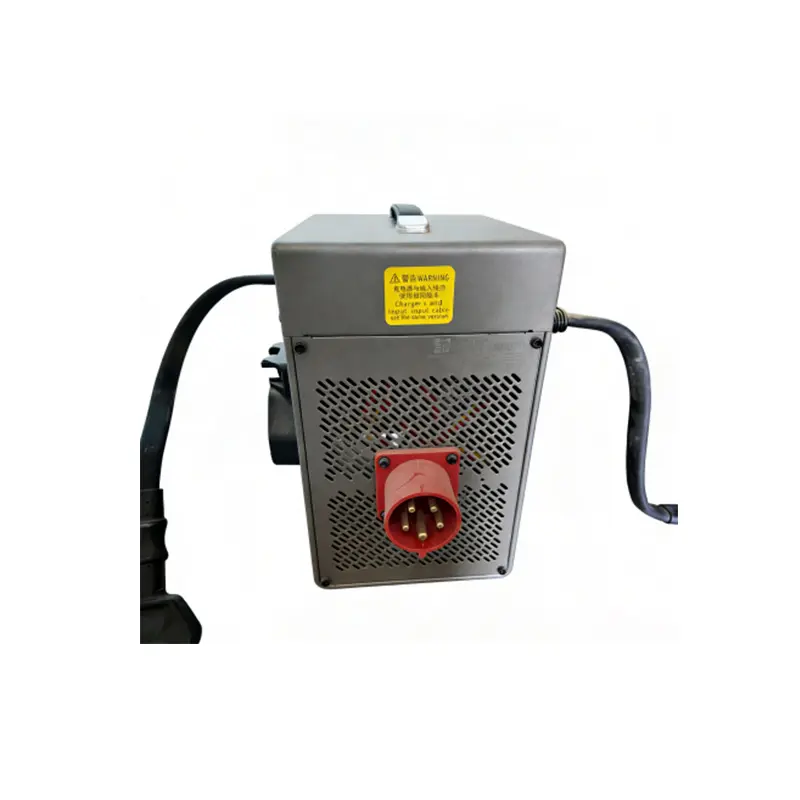
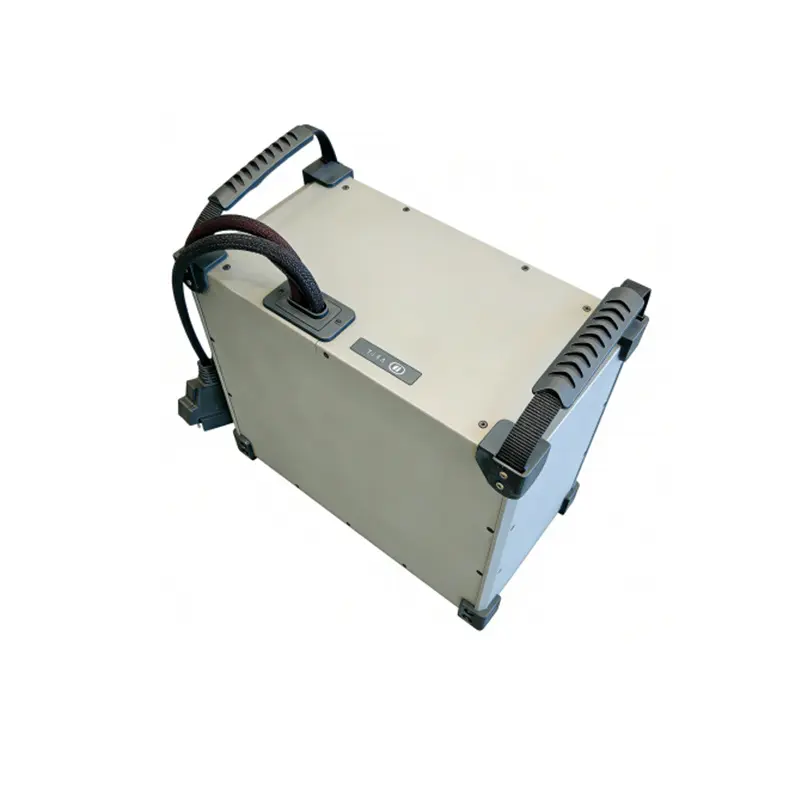
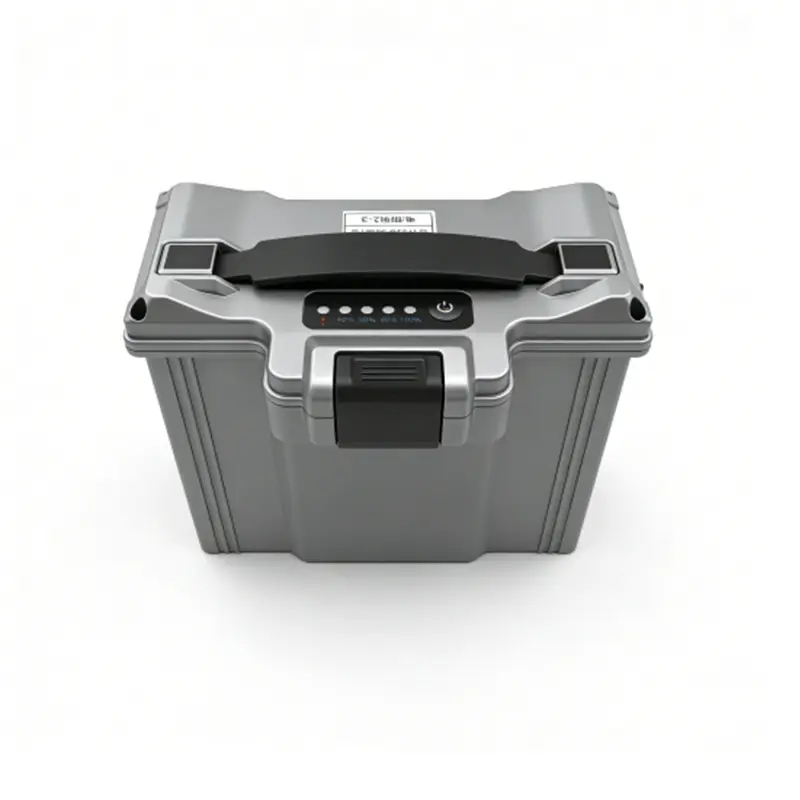
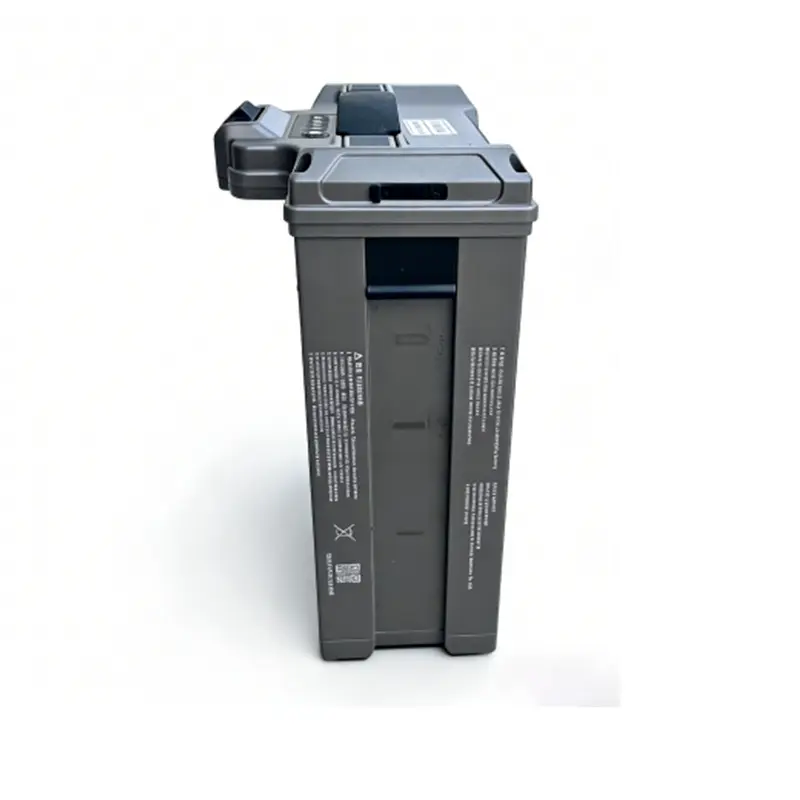
Smart battery pack with integrated BMS and communication
Must-Have Protection Features For UAV Battery BMS
Different drone work stresses batteries very differently. A light-show drone flying three-minute bursts has a different BMS requirement than a cargo UAV pulling high current for twenty-minute cycles. The functions below are the ones we consider mandatory for industrial use, and what each one actually does in the field:
|
Function |
Real-world UAV significance |
|
Overcharge protection |
Avoids cell damage and lithium plating during abnormal charging |
|
Over-discharge protection |
Stops deep discharge that permanently shrinks pack capacity |
|
Overcurrent / short-circuit protection |
Restricts surge current during prop strike, motor blockage or wiring failure |
|
Temperature monitoring |
Disables charge or discharge when the pack runs too hot or too cold |
|
Cell balancing |
Keeps usable capacity close to rated value across the pack’s service life |
|
State of charge reporting |
Delivers reliable remaining-energy readings for pilots and flight controllers |
|
Fault logging |
Provides historical event data for maintenance and warranty decisions |
Cell balancing deserves a closer look, because it is the function most often undersold. Packs that are never balanced slowly drift, the weakest cell hits its limit first, and the whole pack is forced to stop early. Over a hundred cycles the difference between a balanced pack and an unbalanced one can be twenty percent of usable capacity. That is not a marketing number, it is what we measure when packs come back from the field.
drone and battery

Air Shipment Rules: UN38.3 And UN3480
Wondering if your industrial UAV lithium battery can travel by air freight? The short answer is yes, with strict dangerous-goods rules attached.
Every lithium battery shipped by air must pass UN38.3, the full test suite covering altitude simulation, thermal cycling, vibration, mechanical shock, short-circuit, impact, overcharge and forced discharge. A UN38.3 test report from the cell maker is not automatically valid for your assembled pack, a custom pack needs its own testing unless the cells and configuration match the original certification scope.
Classification depends on how the battery ships. Standalone loose packs are classified UN3480. Batteries shipped installed in equipment or packed together with the drone use UN3481. Get this wrong and the airline or freight forwarder will reject the shipment at the counter, sometimes after the cargo has already been booked.
You will also need a valid SDS document for the battery, and most carriers require the pack to be shipped at or below 30 percent state of charge for passenger aircraft. Some airlines tighten this further, so confirm the limit with the forwarder before you book rather than at the warehouse door.
Air freight of lithium batteries sits under the IATA Dangerous Goods Regulations, and the rules change every year. If your export volume justifies it, have the documentation prepared by a specialist, because a single missing certificate can hold a shipment for days and cost more than the certification itself.
Packaging is the part most first-time exporters get wrong. Lithium batteries need rigid outer packaging that passes the UN drop test, with the cells or packs protected from short-circuit during transit, terminal covers fitted, and no metal objects loose in the box. Airlines and forwarders inspect this far more strictly than they did five years ago, and a package that survives a normal courier trip will not automatically survive a dangerous-goods inspection.
Battery Maintenance And Service Life
How a pack is treated between flights decides its real cost per mission more than the purchase price does.
Charge with the matched charger and charge profile, never a random balance charger set to a guessed cell count. Charge in a fire-safe location and never leave a charging pack unattended, no matter how good the BMS is.
For cycle life, avoid habitual full discharges. Shallow cycles, ending flights with 20 to 30 percent remaining, measurably extend pack life compared to flying to the low-voltage cut-off every time. We see well-treated packs in our customer base last well past their rated cycle count, and abused ones fail early with the same manufacturing batch.
Seasonal storage matters for LiPo especially. A pack stored fully charged for three months degrades noticeably faster than one stored at storage voltage. If the fleet is idle for the winter, put packs at storage charge, label them, and check voltage every few weeks.
Semi-solid cells, where we have field data, behave better in storage than LiPo but still follow the same common-sense rules. The chemistry improves margins, it does not remove the need for basic care.
Track battery cost per flight hour instead of price per pack. A pack that costs twenty percent more but delivers thirty percent more cycles is the cheaper battery over a season, and a smart BMS that prevents one in-flight failure pays for itself in a single incident. Buyers who negotiate on unit price alone regularly end up with the most expensive battery per hour flown.
How YIHANG Develops Custom Drone Battery Solutions
We start from the aircraft, not from the cell. A custom industrial drone battery pack is designed around your real flight envelope, not assembled from whatever cells are in stock this month.
Our engineering workflow runs in a fixed order: peak discharge demand analysis, cell chemistry matching, mechanical pack layout, connector selection, BMS protection threshold tuning, then capacity verification and full loaded discharge testing before anything ships.
Peak current analysis matters most, because it defines everything downstream. A mapping drone cruising at low current has a different requirement than a crop-spraying UAV that pulls high current during spray runs, and the pack design changes accordingly.
For flight time as the priority, our long-endurance drone battery line delivers 20 to 40 percent longer flight duration than standard packs of identical rated capacity, measured on the same airframe in the same conditions.
For projects with custom voltage, capacity or physical dimension envelopes, share your requirements through our inquiry page. Our engineering team reviews the parameters and proposes suitable lithium battery configurations for your UAV platform.
Typical custom projects we support range from single-pack prototyping for a new airframe to production runs for established fleets. Lead times vary with cell availability and testing requirements, but we give you a written schedule with the quote, and the delivery documentation includes the test report for every pack in the order. That paperwork is not a courtesy, it is what your own quality department and your end customer will ask for.
If you are sourcing custom industrial drone battery packs with an integrated smart BMS for inspection, agriculture or cargo missions, reach out to YIHANG Power. We run peak-current simulation and loaded discharge validation for your real flight conditions, and we have done it for customers on five continents.
Send over your voltage, capacity and dimension requirements today. The first technical discussion costs nothing, and it will tell you more about your battery options than a week of datasheet reading.