- English
- Español
- Português
- русский
- Français
- 日本語
- Deutsch
- tiếng Việt
- Italiano
- Nederlands
- ภาษาไทย
- Polski
- 한국어
- Svenska
- magyar
- Malay
- বাংলা ভাষার
- Dansk
- Suomi
- हिन्दी
- Pilipino
- Türkçe
- Gaeilge
- العربية
- Indonesia
- Norsk
- تمل
- český
- ελληνικά
- український
- Javanese
- فارسی
- தமிழ்
- తెలుగు
- नेपाली
- Burmese
- български
- ລາວ
- Latine
- Қазақша
- Euskal
- Azərbaycan
- Slovenský jazyk
- Македонски
- Lietuvos
- Eesti Keel
- Română
- Slovenski
- मराठी
- Srpski језик
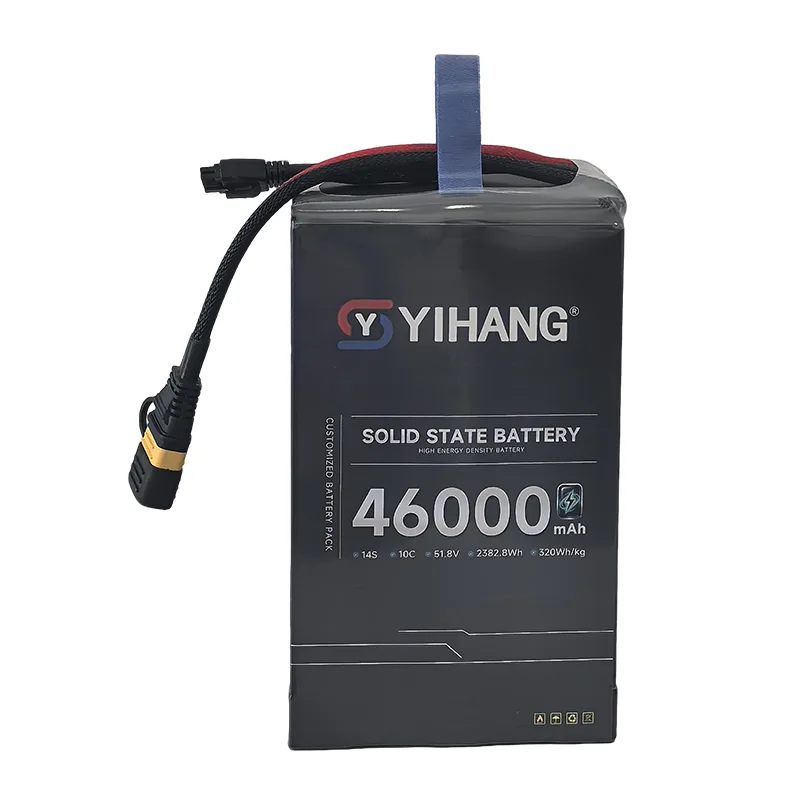
46000mAh 14S Drone Battery for UAV
As a China supplier, YIHANG produces this 46000mAh 14S Drone Battery for UAV and agricultural and industrial platforms. The 46Ah power pack features 3C continuous discharge, 320Wh/kg energy density, and heavy-gauge cables. Each unit is assembled and cycle-tested in our factory. OEM/ODM connectors and dimensions supported based on engineering data.
Send Inquiry
Product Description
This 46000mAh 14S Drone Battery for UAV offered by Yihang is built on our own line in China, by the people who answer your technical questions. It holds 46Ah at 51.8V nominal, which comes to 2,382.8Wh of stored energy. Pack-level energy density is 320Wh/kg. The 14S series carries a 3C continuous and 10C peak rating; the exact numbers for the 46Ah model are in the datasheet, and we will send it before you design around assumptions.
We made this pack for working drones: agricultural sprayers, aerial mapping platforms, and cargo UAVs that fly long missions and get their batteries swapped in the field. If your aircraft runs 14S and pulls serious current for an hour or more, this page is relevant to you. If it is a small platform with light loads, a smaller pack will cost less and fly longer per dollar. We will not argue with that.
Buying direct from the factory also means the spec you approve is the spec you get. No rebadging, no trading-house version with swapped cells. The pack that lands on your bench is the one we tested and documented.
Technical Specifications
| Product type | 46000mAh 14S drone battery for UAV |
| Rated capacity | 46,000mAh / 46Ah |
| Nominal voltage | 51.8V |
| Rated energy | 2,382.8Wh (51.8V × 46Ah) |
| Discharge rate | Series rating: 3C continuous, 10C peak instantaneous. Contact us for exact C-rate of 46Ah model. |
| Maximum charging voltage | 58.8V (marked on product label). Refer to official datasheet for full charging parameters. |
| Maximum charging current | Max charging current: ≤1C. Full charging parameters available in official datasheet. |
| Energy density | 320Wh/kg (pack-level energy density, marked on product label) |
| Pack dimensions / weight | Contact us to obtain detailed dimension & weight datasheet |
| Connector | Connector shown in pictures; multiple connector options available upon request. |
| Customization | Customizable: voltage, capacity, dimension, connector and cable solution based on engineering assessment. |
YIHANG 14S BATTERY SPECIFICATION TABLE
| Energy Density | Model | Dimensions (L×W×H) | Weight | Nominal Voltage | Discharge Rate / Notes |
| 275Wh/kg | YH001-14S16AH | 115×75×195 mm | 3.25 kg | 51.8 V | Continuous 3C; instant 10C |
| YH001-14S22AH | 150×75×195 mm | 4.55 kg | 51.8 V | ||
| YH001-14S27AH | 140×90×213 mm | 5.45 kg | 51.8 V | ||
| YH001-14S30AH | 156×90×213 mm | 6.1 kg | 51.8 V | ||
| 275Wh/kg (HV) | YH003-14S25AH | 147×90×213 mm | 5.6 kg | 55.3 V | |
| YH003-14S37AH | 160×107×226 mm | 7.94 kg | 55.3 V | ||
| YH003-14S40AH | 168×107×226 mm | 8.69 kg | 55.3 V | ||
| 300Wh/kg | YH001-14S20AH | 120×90×213 mm | 3.9 kg | 51.8 V | |
| YH001-14S25AH | 151×76×193 mm | 4.77 kg | 51.8 V | ||
| YH004-14S29AH | 140×90×213 mm | 5.45 kg | 51.8 V | ||
| 310Wh/kg | YH004-14S8.5AH | 88×56×160 mm | 1.9 kg | 51.8 V | |
| 320Wh/kg | YH002-14S18AH | 109×76×188 mm | 3.41 kg | 51.8 V | |
| YH002-14S25AH | 147×76×188 mm | 4.53 kg | 51.8 V | ||
| YH002-14S33AH | 153×90×217 mm | 5.89 kg | 51.8 V | ||
| YH002-14S46AH | 105×146×255 mm | 8.4 kg | 51.8 V | ||
| YH002-14S50AH | 158×107×245 mm | 8.83 kg | 51.8 V | ||
| YH002-14S55AH | 126×146×255 mm | 9.87 kg | 51.8 V | ||
| YH002-14S67AH | 151×146×255 mm | 11.72 kg | 51.8 V | ||
| 330Wh/kg | YH002-14S14AH | 120×62×175 mm | 2.73 kg | 51.8 V | |
| YH002-14S22AH | 156×76×188 mm | 4.0 kg | 51.8 V | ||
| YH002-14S30AH | 171×76×188 mm | 5.23 kg | 51.8 V | ||
| YH002-14S36AH | 158×90×213 mm | 6.35 kg | 51.8 V | ||
| 340Wh/kg | YH004-14S28AH | 149×76×196 mm | 4.7 kg | 51.8 V | |
| YH004-14S40AH | 158×92×213 mm | 6.45 kg | 51.8 V | ||
| 370Wh/kg | YH001-14S108AH | 171×120×395 mm | 15.66 kg | 51.8 V | Continuous 1C |
| 400Wh/kg | YH003-14S16.5AH | 114×63×176 mm | 2.7 kg | 51.8 V | Continuous 2C; 3C for 3–5 min; instant 10C |
| YH003-14S33AH | 161×78×193 mm | 4.9 kg | 51.8 V | ||
| YH003-14S40AH | 150×90×213 mm | 5.64 kg | 51.8 V | ||
| YH003-14S44AH | 170×90×213 mm | 6.46 kg | 51.8 V | ||
| YH003-14S50AH | 122×125×245 mm | 7.31 kg | 51.8 V | ||
| YH003-14S66AH | 114×154×285 mm | 9.7 kg | 51.8 V | ||
| YH003-14S74AH | 122×154×294 mm | 10.34 kg | 51.8 V | ||
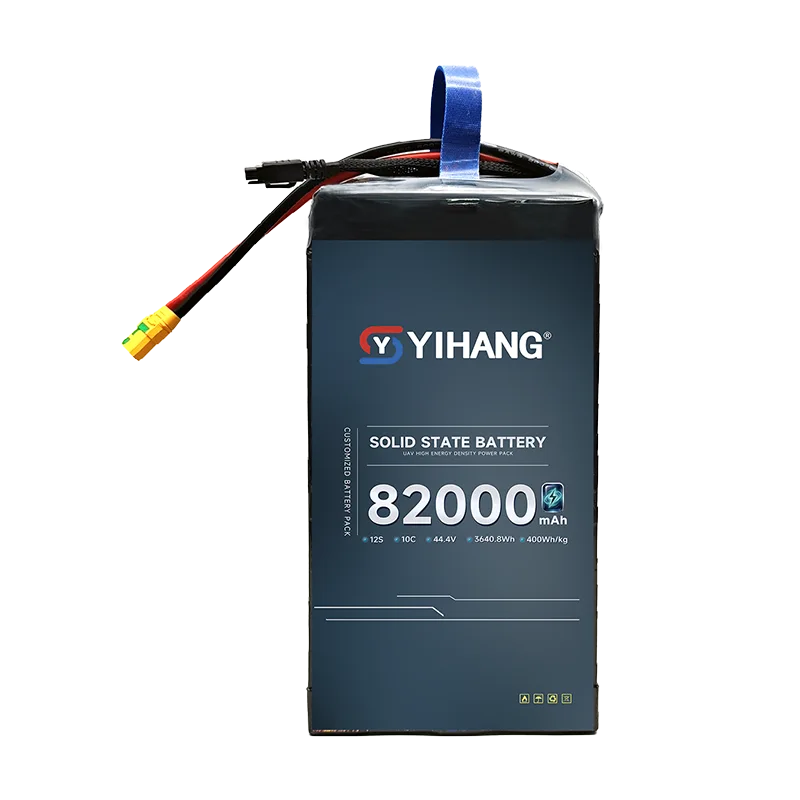
| YH003-14S82AH | 132×154×294 mm | 11.23 kg | 51.8 V | ||
| YH004-14S52AH | 142×75×275 mm | 7.1 kg | 53.2 V | Charging: 0–45°C / 0.2C; Discharging: −20–0°C / 3C and 0–45°C / 1C | |
| 500Wh/kg | YH004-14S22AH | 101×76×188 mm | 3.01 kg | 53.2 V | |
| YH004-14S25.5AH | 116×76×188 mm | 3.3 kg | 53.2 V |
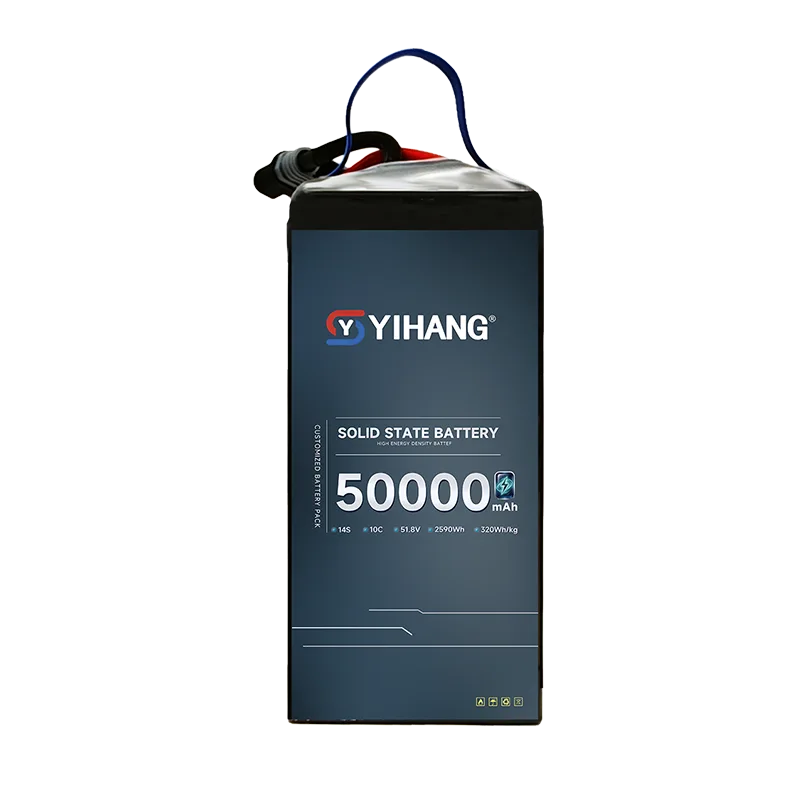
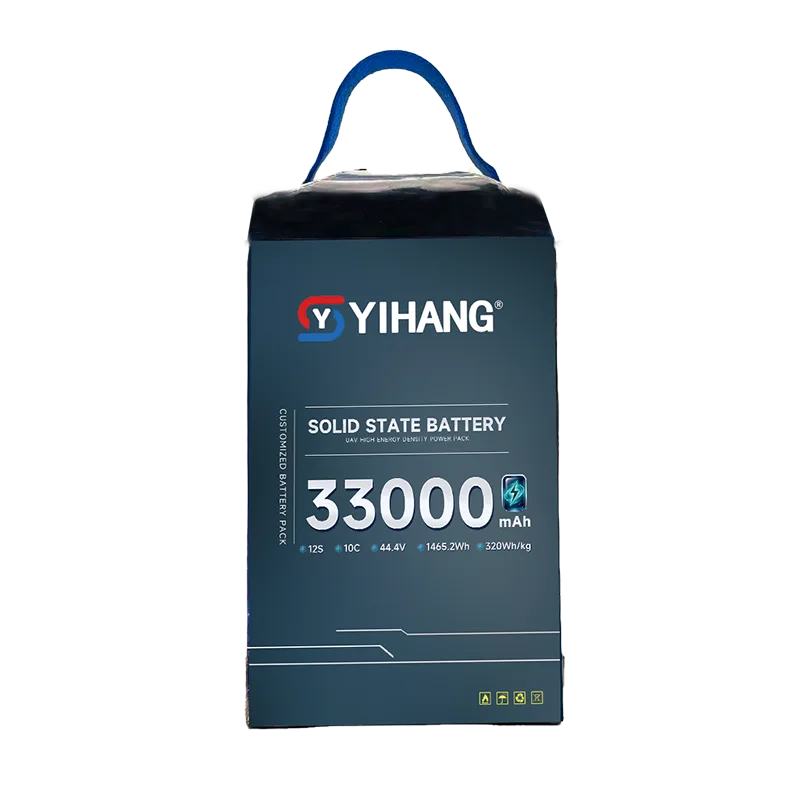
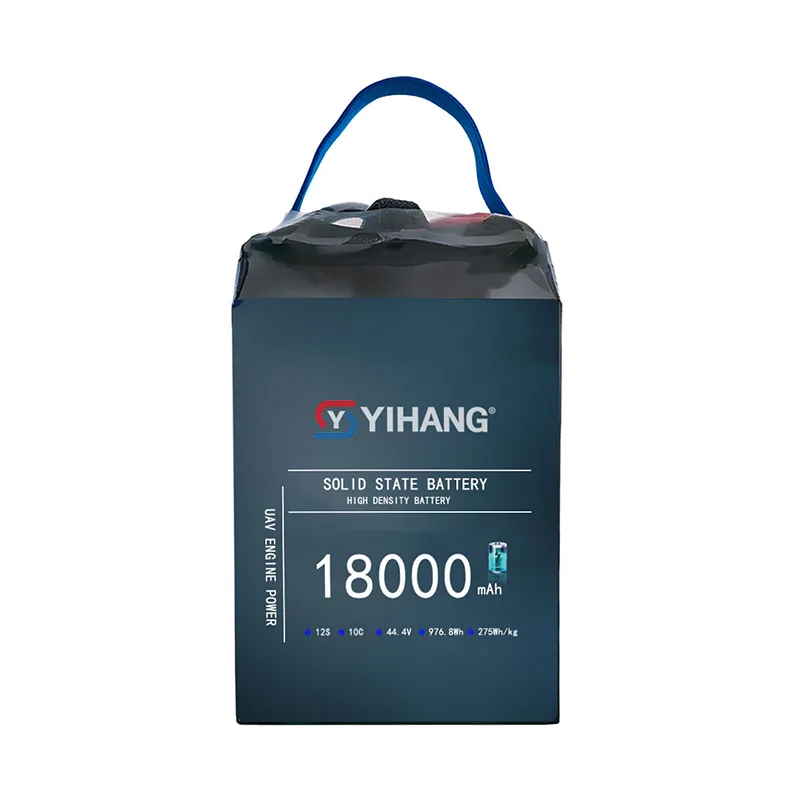
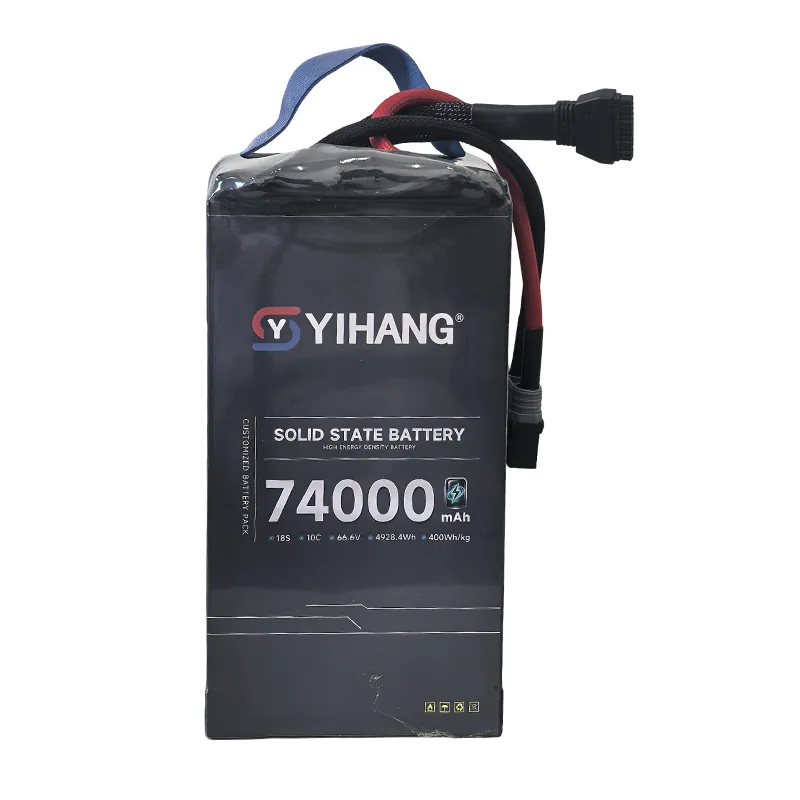
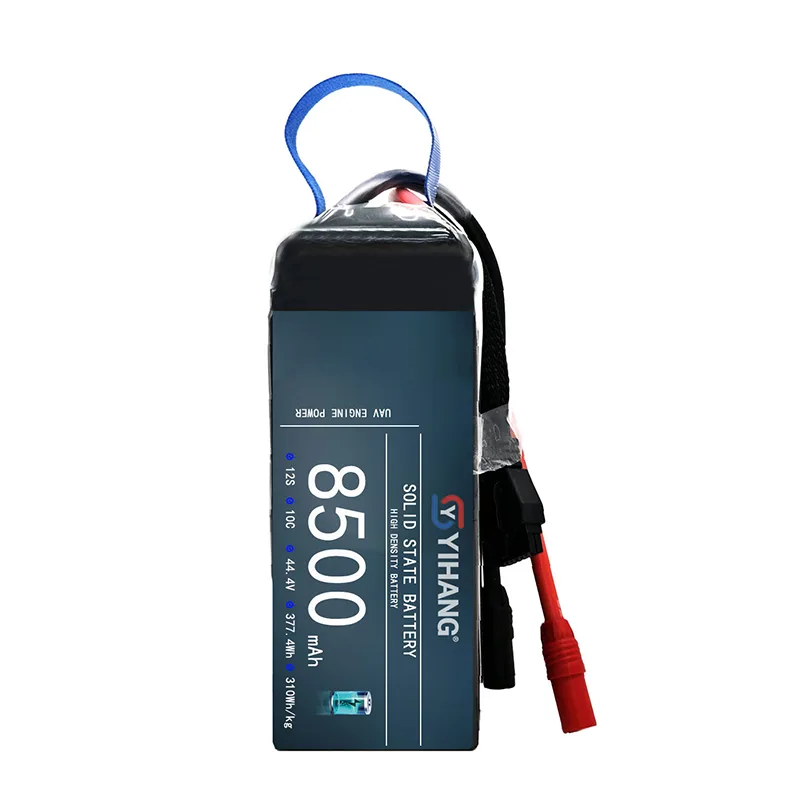
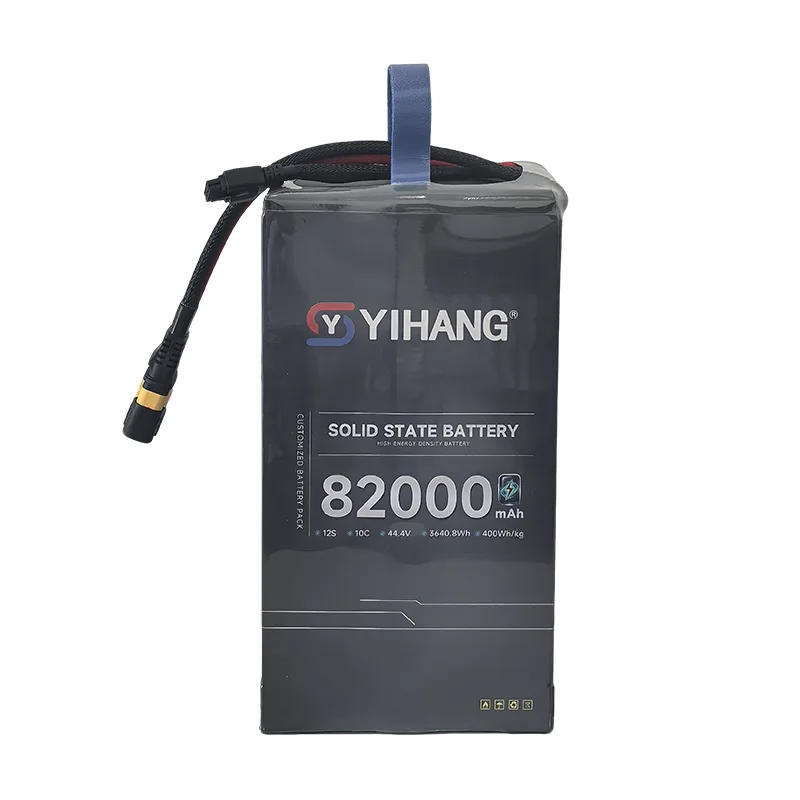
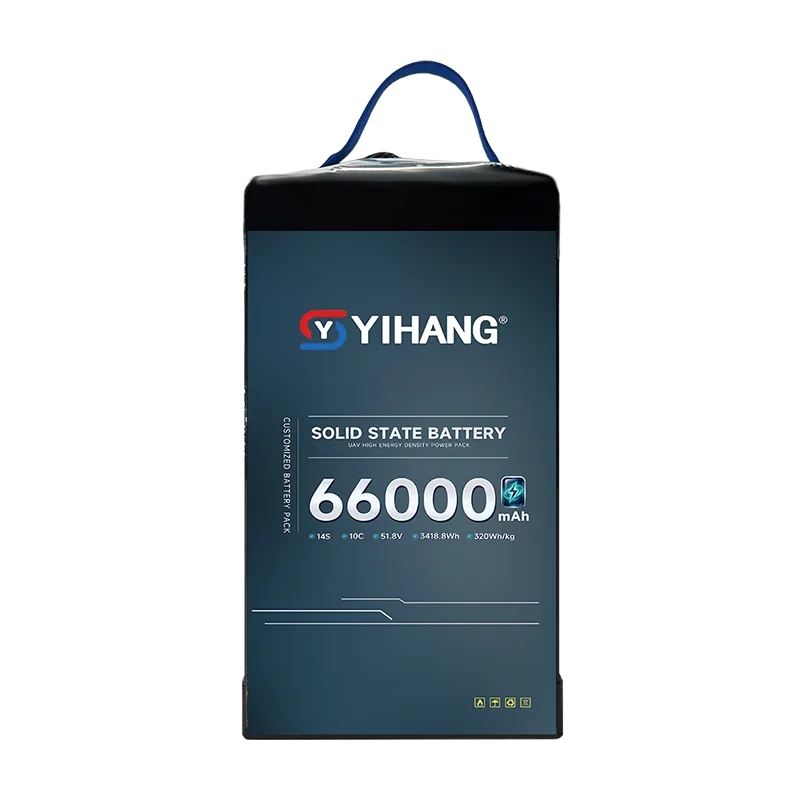
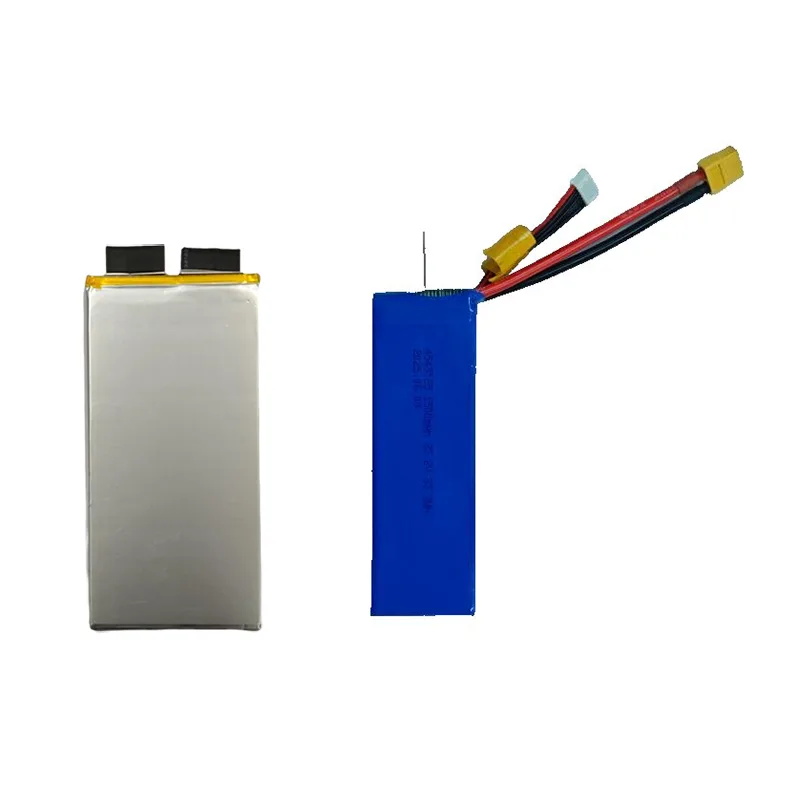
14S 46000mAh 51.8V UAV Battery – 46Ah Pack for Heavy-Lift Industrial Drones
Voltage Is Not the Whole Story – Watch the Full-Charge Number
A 14S lithium pack runs 51.8V nominal and 58.8V at full charge. In our experience, most integration faults start here: builders size ESCs and power distribution boards against 51.8V and never check the 58.8V figure. At full charge, some aircraft electronics hit their overvoltage protection, or run outside the rated window, and the battery gets blamed for what is really a system spec issue. Verify that every component between the pack and the motors accepts both numbers. It takes five minutes and saves a grounded drone.
Capacity, Current, and Flight Time
Capacity tells you how much energy the pack stores. It does not tell you whether the pack can deliver it without sagging. The number that decides that is current draw: your aircraft’s measured continuous and peak current. We see operators pick a battery by capacity alone, then find the voltage sags under load and the drone lands early with a warm pack.
For agricultural aircraft the draw is never steady. A sprayer climbs out with a full tank, the pump runs, the boom is loaded; on the way back the same airframe draws less. Design the pack around the worst case, not the brochure. Send us your current readings and we will tell you honestly whether 46Ah is the right size, or whether you should look up or down our series.
What 320Wh/kg Actually Means
Every kilogram of battery is dead weight in the air. Energy density decides how much of that dead weight pays for flight time. At 320Wh/kg, this pack stores 2,382.8Wh in 8.4kg; a lower-density pack of the same energy would weigh more, and your aircraft would spend a bigger share of its lift just carrying its own power. That matters on mapping routes where endurance is the whole job.
The figure is pack-level, meaning it includes the housing, cabling, and connectors, not just the cells. That is the number a drone designer can actually use. We publish the pack-level number on purpose; some suppliers quote cell-level density because it looks better. The pack number is the honest one.
Where This Pack Is Built For
Three missions keep coming up in our conversations with operators: spraying, mapping, and cargo.
Spray drones want hover time and heavy payload, which means high average current. Mapping platforms fly long, steady routes, so energy density matters most; every gram saved is range. Cargo UAVs carry variable loads and need discharge headroom and cables that stay cool under sustained current. The pack addresses all three: heavy-gauge wiring, a rigid enclosure that damps vibration, and a lifting strap so a field swap takes seconds instead of a wrestling match.
Dimensions, Weight, and Fit
The 46Ah pack weighs 8.4kg and measures 105 × 146 × 255mm. The housing is rigid, not shrink-wrapped, so the cells stay put under the vibration of a working airframe. The strap sits on top; the power leads use heavy-gauge cable with the connector shown in the photos.
Battery bays vary between manufacturers, sometimes between models in the same line. That is why OEM and ODM stay open: connector type, cable length, and cable exit direction can all be adjusted after an engineering review. If you are designing a new frame, send the installation drawing. We will say plainly whether the 46Ah pack fits as-is or what has to move.
The YH002 Line: Where the 46Ah Sits
This pack belongs to our YH002 series, which runs from 18Ah up to 67Ah at the same 320Wh/kg density. The 46Ah model is the middle-ground choice for most heavy-lift airframes: enough energy for long missions, still light enough to keep payload headroom. If your aircraft sits between two sizes, the comparison usually comes down to mission length versus takeoff weight, and that is a conversation worth having before you order.
Every Pack Gets Cycle-Tested Before It Ships
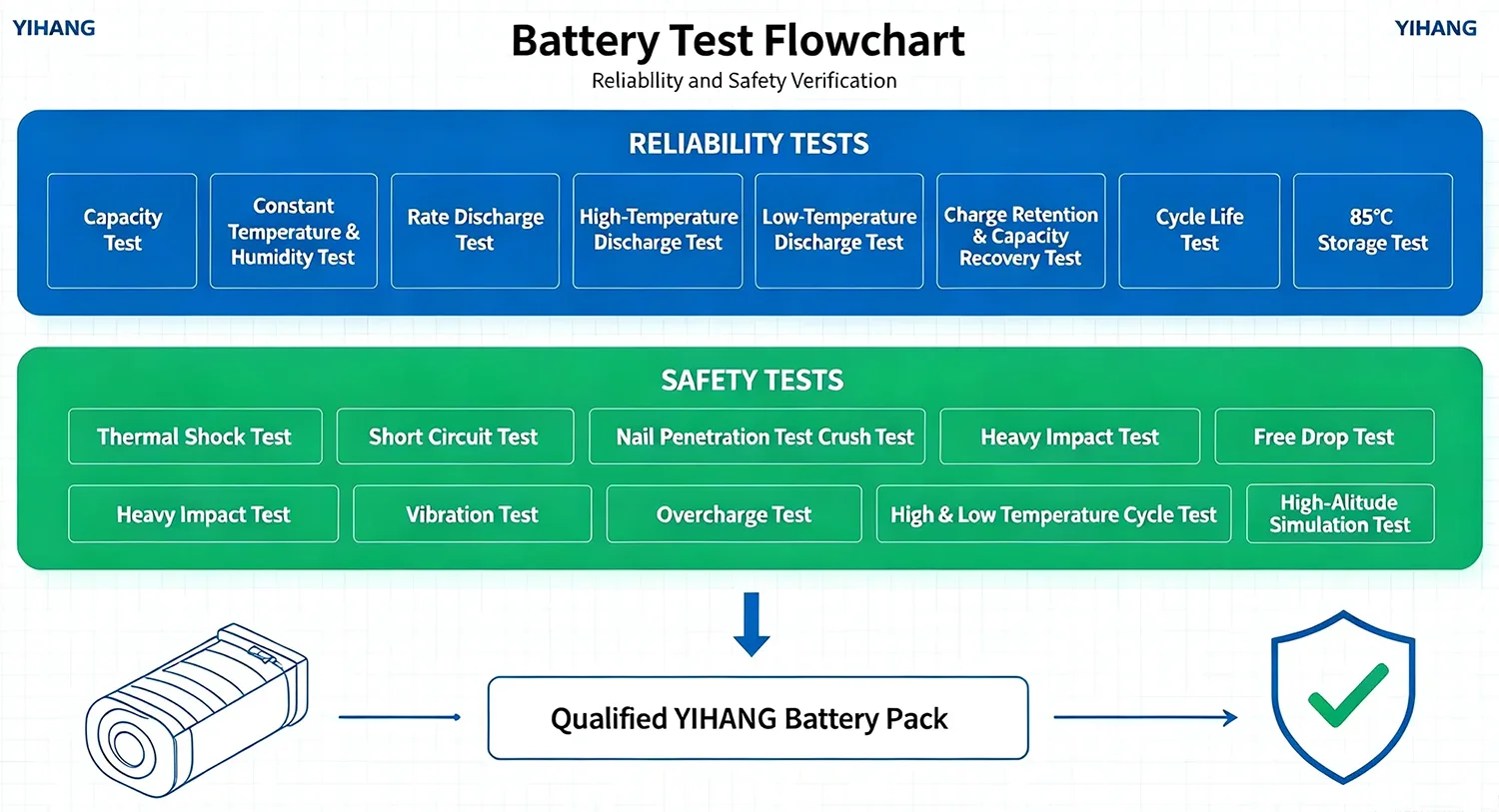
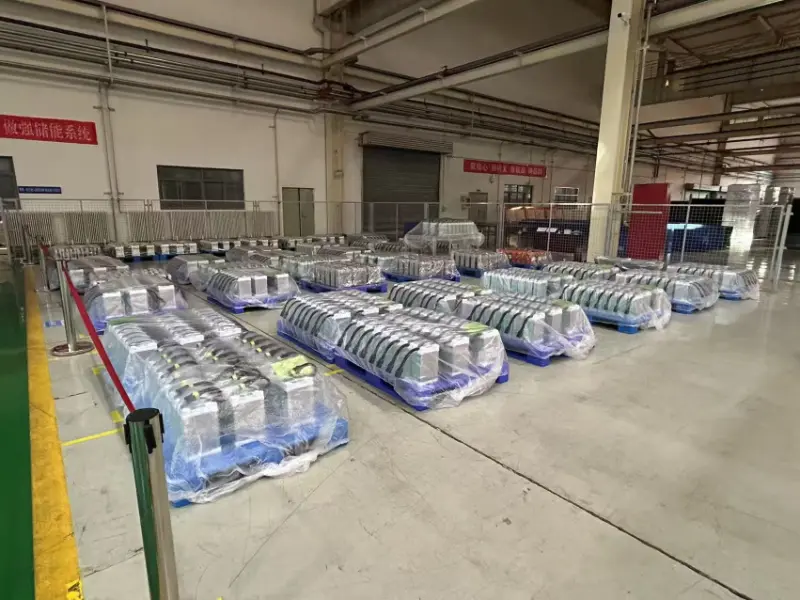
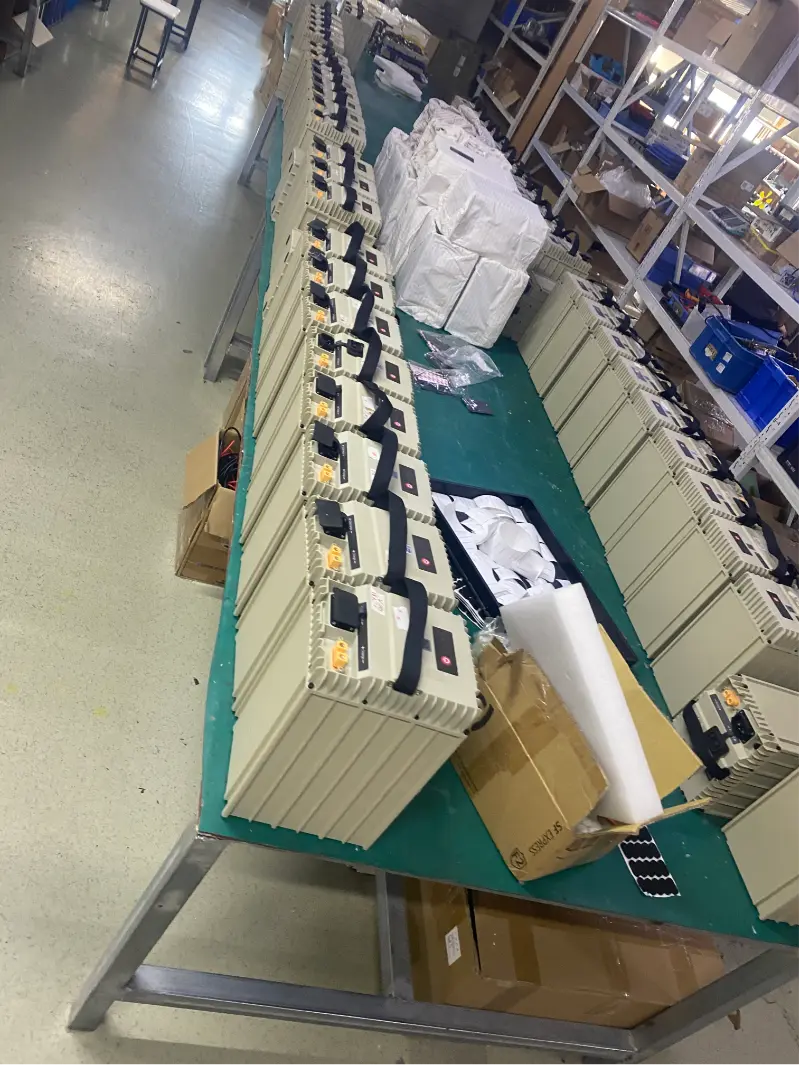
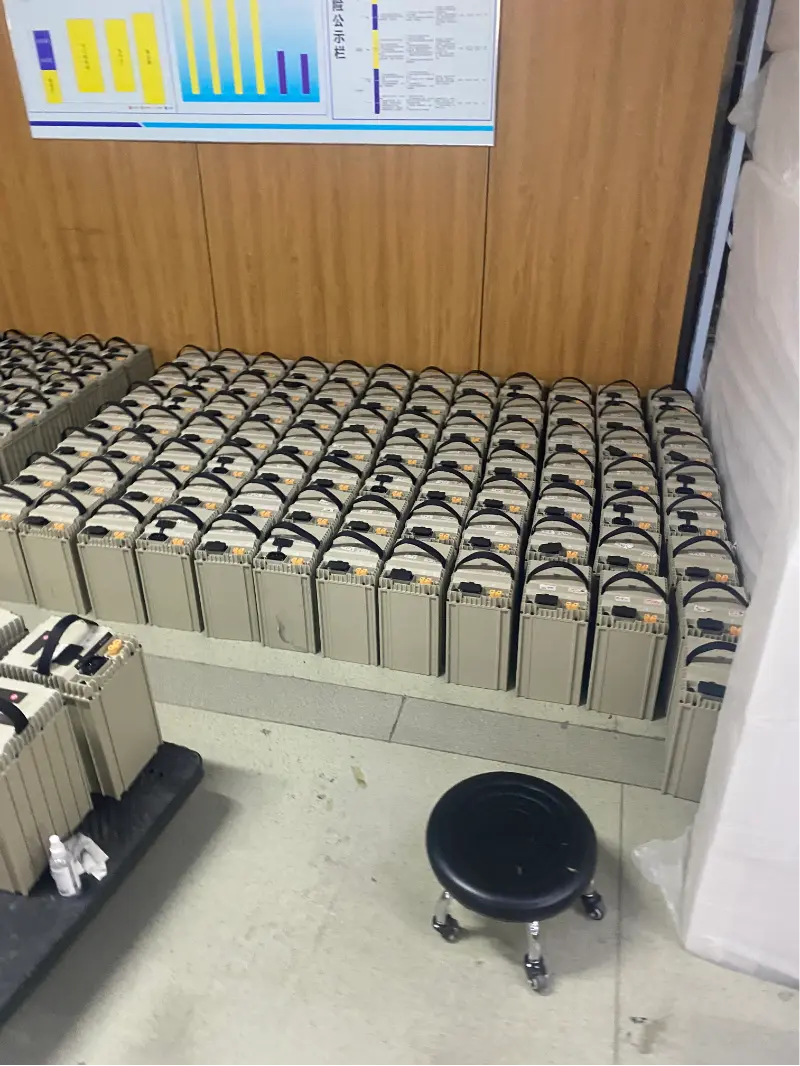
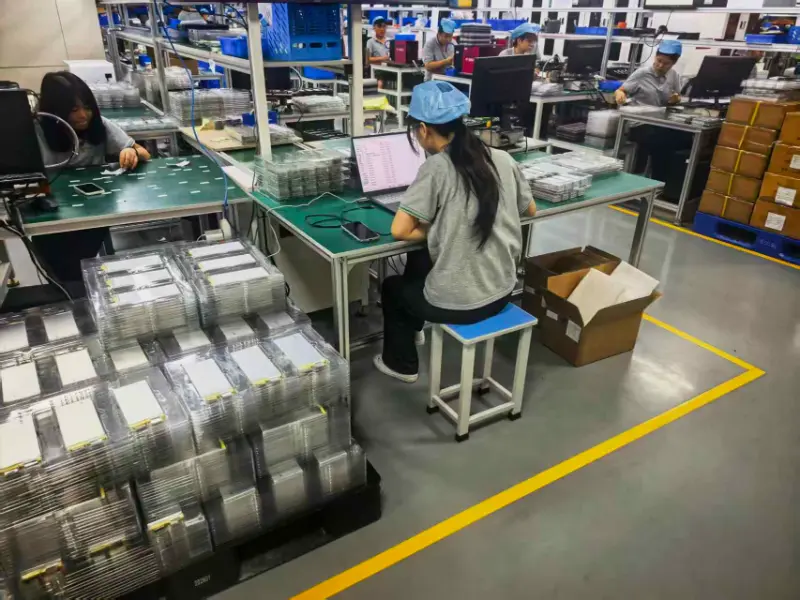
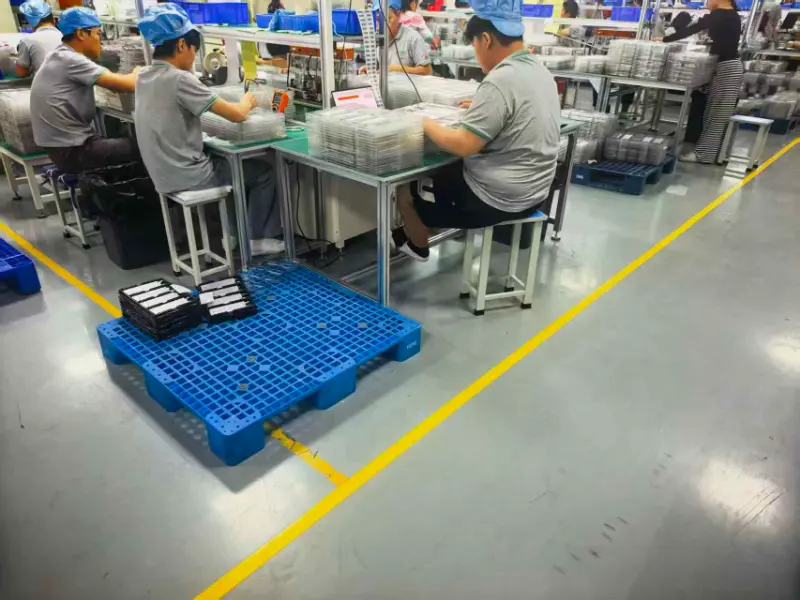
Testing here is not a spot-check. Every finished pack goes through a full charge-discharge cycle test and a 24-hour high-temperature aging run. The aging run exists to catch weak cells early: after hours of heat, any cell that drifts out of balance shows up in our workshop, not in your drone. Cells are grouped and joined with automated spot welding, which gives consistent joints. Hand-soldered packs fail under high current: the joint heats, resistance climbs, and the pack dies mid-mission. We check the solder joints and terminal connections on the heavy-gauge leads for the same reason. Each production batch ships with a test report that matches the official datasheet.
Charging and Handling Basics
Use a charger built for 14S lithium packs. Maximum charging voltage is 58.8V; charging current stays at or below 1C. Charge within 0–45°C ambient temperature. For discharge, the window is −20–0°C at 3C and 0–45°C at 1C. Cold weather costs capacity; plan around it instead of being surprised by it. Check the cables and connector pins before every flight. If a pack shows swelling, shell damage, or abnormal heat, stop using it. The limits above are what we test against; the full charging parameters live in the official datasheet.
OEM / ODM: When the Stock Pack Does Not Fit
Customization is a normal part of our work, not an exception. Voltage, capacity, dimensions, connectors, and the cable solution can all change, but every change goes through an engineering assessment first. A connector swap can shift where heat concentrates; a dimension change can affect cell cooling. We review, we do not just accept.
For a custom project, send us: target voltage, required capacity, aircraft model, continuous and peak current limits, the installation space drawing, connector specifications, and estimated order volume. With that, we build a recommendation on the actual load profile and specify the right cable and connector setup. You talk to engineers directly, not to a layer that relays questions.
Why Work with YIHANG
• Application-based configuration review: requirements are checked against your aircraft and operating conditions, not against a price list.
• Real OEM and ODM: voltage, capacity, dimensions, connectors, and cable routing are on the table.
• Spec locked at sample stage: electrical and mechanical parameters are documented and approved before mass production, so batch matches sample.
• Direct engineering contact: send drawings, interface details, and operating conditions; get answers from the people who build the pack.

What to Send Us for a Quote
A good quote starts with a good brief. Send your UAV model, battery bay drawing, current readings, target voltage and capacity, order volume, and destination country. Lithium batteries for air freight usually require UN38.3 and MSDS documentation; tell us the shipping route and our sales team will confirm what we can provide with your order. MOQ and lead time depend on quantity and customization scope, so we quote after we see the brief, not before.
Questions We Get Most
Why can’t you give flight time from the capacity number?
Because flight time follows average current draw, and that follows aircraft weight, payload, propellers, and mission profile. Give us those and we will estimate it properly.
What C-rate does the 46Ah model actually support?
The 14S series is rated for 3C continuous and 10C peak. The exact figure for the 46Ah model is confirmed in the datasheet; ask and we will send it with the full specification.
Do you approve samples before mass production?
Yes. Electrical and mechanical parameters are documented and approved at the sample stage, then locked for production. Specs do not change silently between sample and batch.
How long is lead time for a custom pack?
It depends on quantity and the scope of changes. A quote with dates comes after we review your brief.
Is the test report included with the order?
Each production batch ships with a test report matching the official datasheet. Yes.
FAQ
Q:What nominal voltage does this 46000mAh UAV battery work at?
A:This 46000mAh UAV battery features a 51.8V nominal voltage (14S configuration), with a maximum full-charge voltage reaching 58.8V. Please confirm your drone ESC and power board support 58.8V peak voltage before installation.
Q:What is the total energy and energy density of this 51.8V semi solid-state drone battery?
A:This 51.8V high energy drone battery delivers 2382.8Wh rated energy, with a pack-level energy density of 320Wh/kg. High energy density helps drones achieve longer flight time without excessive weight gain.
Q:Does YIHANG provide UN38.3 and MSDS certificates for this 14S 46Ah drone battery for export shipment?
A:Yes. We can supply UN38.3, MSDS and related shipping documents for this 14S 46Ah drone battery. Certificates will be provided upon request for formal orders to support global cross-border logistics.
Q:Can you build custom OEM ODM UAV battery pack based on my drone installation requirements?
A:Yes, we support OEM ODM UAV battery pack customisation. We can adjust voltage, capacity, dimension, connector types and cable routing. All custom solutions need engineering evaluation according to your UAV drawings and current requirements.
Q:How much flight time can I get using this 46000mAh battery on my agricultural spraying drone?
A:Flight time of this UAV battery cannot rely only on capacity data. It is affected by drone weight, liquid payload, propeller setup and actual mission profile. Share your UAV specifications, and our engineers will give you a practical flight-time estimation.
Related Category
Send Inquiry
Please Feel free to give your inquiry in the form below. We will reply you in 24 hours.